
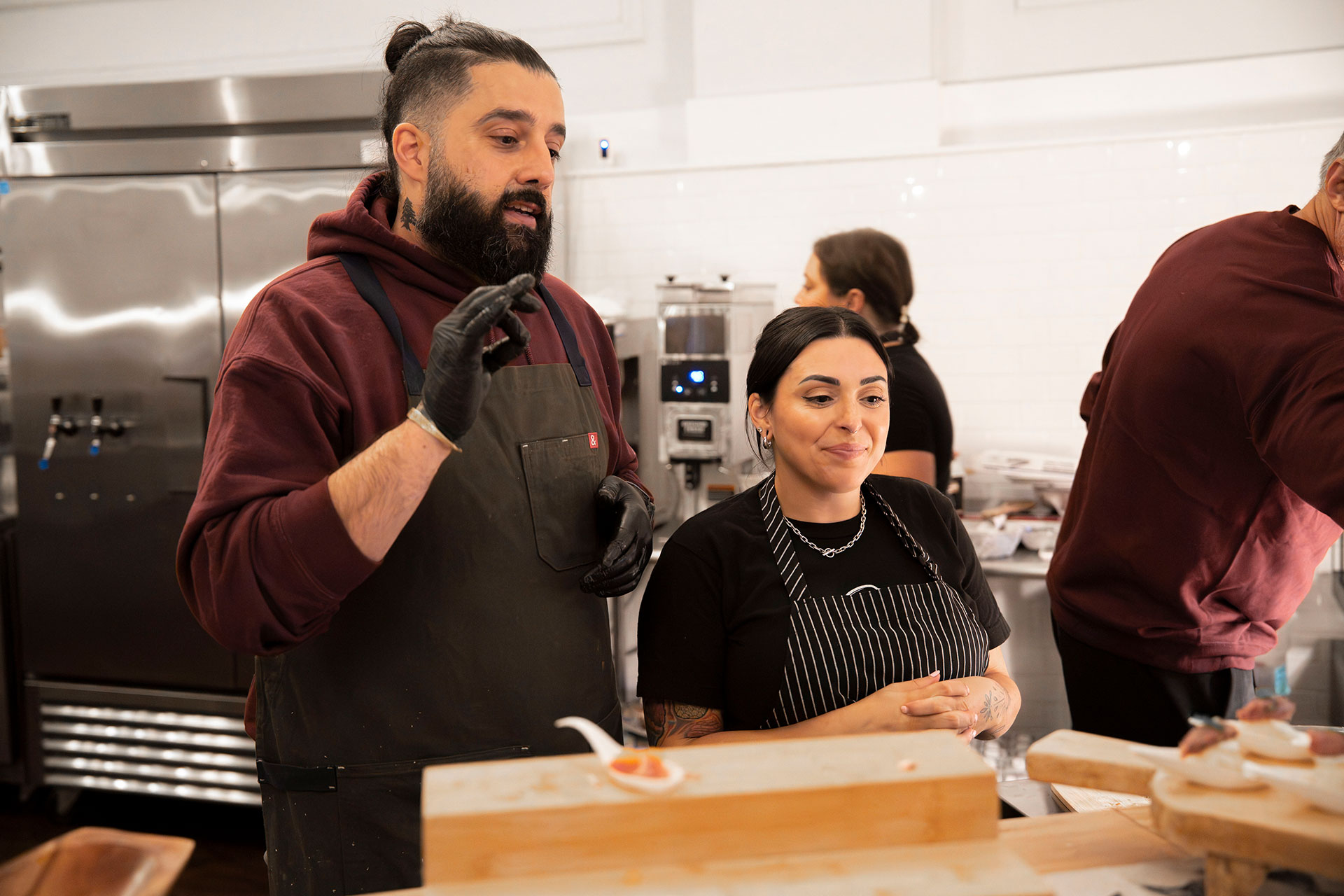
The incessant creep of AI means incessant questions about how much of it we want in our lives. Our new columnist describes how his small New Jersey restaurant is coming up with answers.

By Elias Bitar
Restaurateur, Columnist, Critic-at-Large
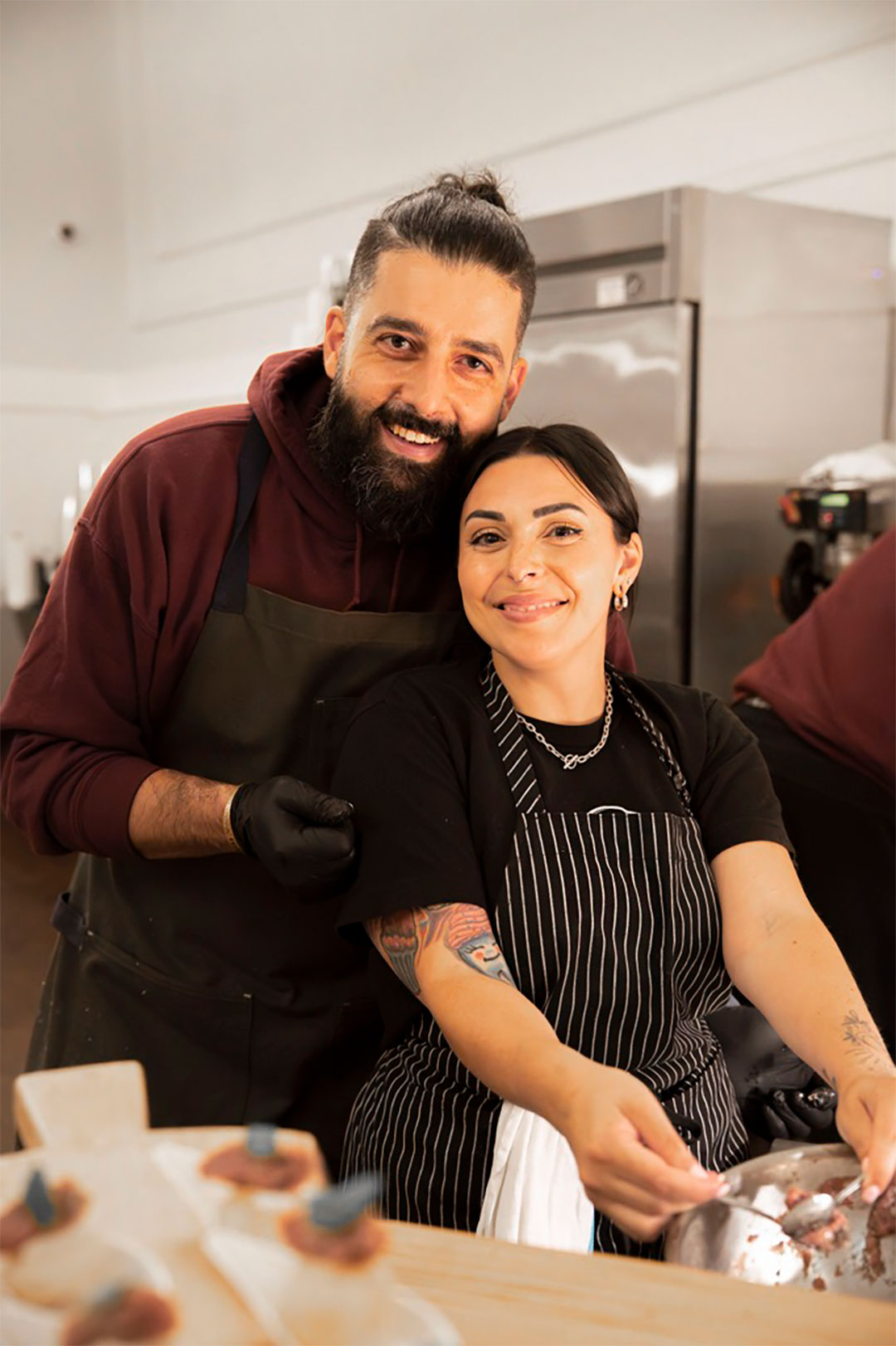
Elias Bitar runs Norma’s Eastern Mediterranean Cuisine in Cherry Hill, New Jersey. He’ll also be writing a regular column for us about restaurant operations (and sports and politics and parenting and art and culture).
When it comes to AI in restaurants, I like to use an analytical mechanism I call dialectical value judgment processing.
Just kidding. I made that up.
But I do find myself making value judgments about AI almost every day. I run Norma’s, a third-generation family restaurant (yes, I’m counting my children, who work there part-time) in South Jersey named after my mother. I’m interested in what AI can do for a small business like ours. I’m also interested in what we might lose if we let it do too much.
I’ll use it to help me write a catering proposal, then wonder what happens when every restaurant’s proposal starts to look the same. Why should that matter? Well, it’s just a subliminal signal of inauthenticity. Or maybe it’s just an invoice. Let’s not overthink things.
Instagram craves consistency, so of course I appreciate the time SpotHopper, the AI-driven marketing software, saves me by turning my actual food photos into regular posts. Then I cringe at the absolutely soulless captions it craps onto my grid:
“Treat yourself to something fresh and flavorful—come try our Stuffed Grape Leaves, hand rolled with rice, parsley, onions, and a unique blend of spices. LEMON EMOJI! Each bite is tender and zesty. Do you like yours with a squeeze of lemon, a dip in sauce, or just as they are? OLIVE EMOJI! FALAFEL EMOJI! KEBAB EMOJI!!!!”
Apparently I’m not alone. In a VistaPrint survey of small food and beverage businesses, 28% of respondents who used AI said its output often felt “generic or off-brand.” I’m shocked that only 28% felt that way.
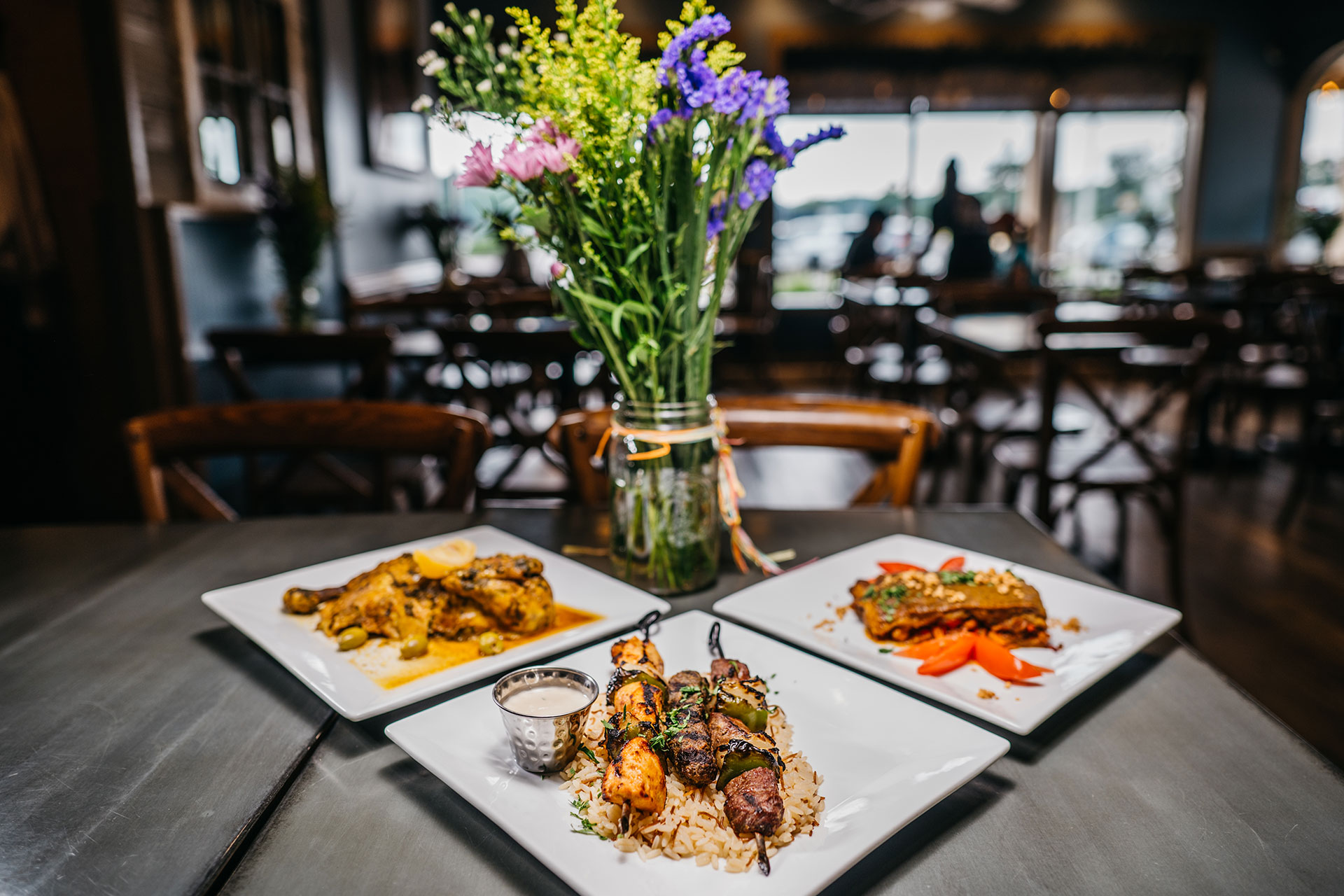
Interspersed with the posts from SpotHopper are funny reels I write with my own kids. Or a POV interview with a longtime customer. Or a video of my father, George, Norma’s husband and the de facto mayor of the strip mall where our restaurant lives. I wonder if customers notice or mind the difference between those posts and the steadier, more mechanical SpotHopper ones.
Despite the grand mediocrity, if we keep using it, we’ll probably get used to it, if we haven’t already. We got used to Auto-Tune in the early 2000s (and in the latest Strokes record).
The easiest target in this conversation is AI-generated food imagery: macaroni and cheese that looks like a bowl of orange robot caterpillars, and cheeseburgers that appear to have undergone extreme looksmaxxing. But the images keep getting better. We’d be foolish to build our whole argument around how bad they look today.
They’re improving superlinearly.
Oh, you don’t think superlinearly is a word? According to Google, it is. I bet someone invented it because “exponentially” just wasn’t cutting it anymore.
Last month I polled our Instagram followers on how they would feel if we switched to an AI telephone answering service. No more “Thank you for calling Norma’s, how can I help you?” from Ziad or Mariam. Ninety to one in favor of the human. One anonymous soul preferred the robot. I may have cooked the results with how I formulated the question. Regardless, I did get a few tongue-in-cheek threats in the comments. At least I think they were kidding.
Our restaurant was an early adopter of online ordering. We even had our own branded app shortly after apps became a thing. There was undeniable pushback, but we reassured customers that they could still place an order with a live, sentient being over the phone. That was 14 years ago. We still take those living, breathing phone orders today, although they now account for only about 20% of our takeout business.
So I know that people can resist a new technology and eventually appreciate its benefits. I’ve watched it happen from behind the counter. But the more I look at AI in restaurants, the more I find myself looking past the counter and into the kitchen.
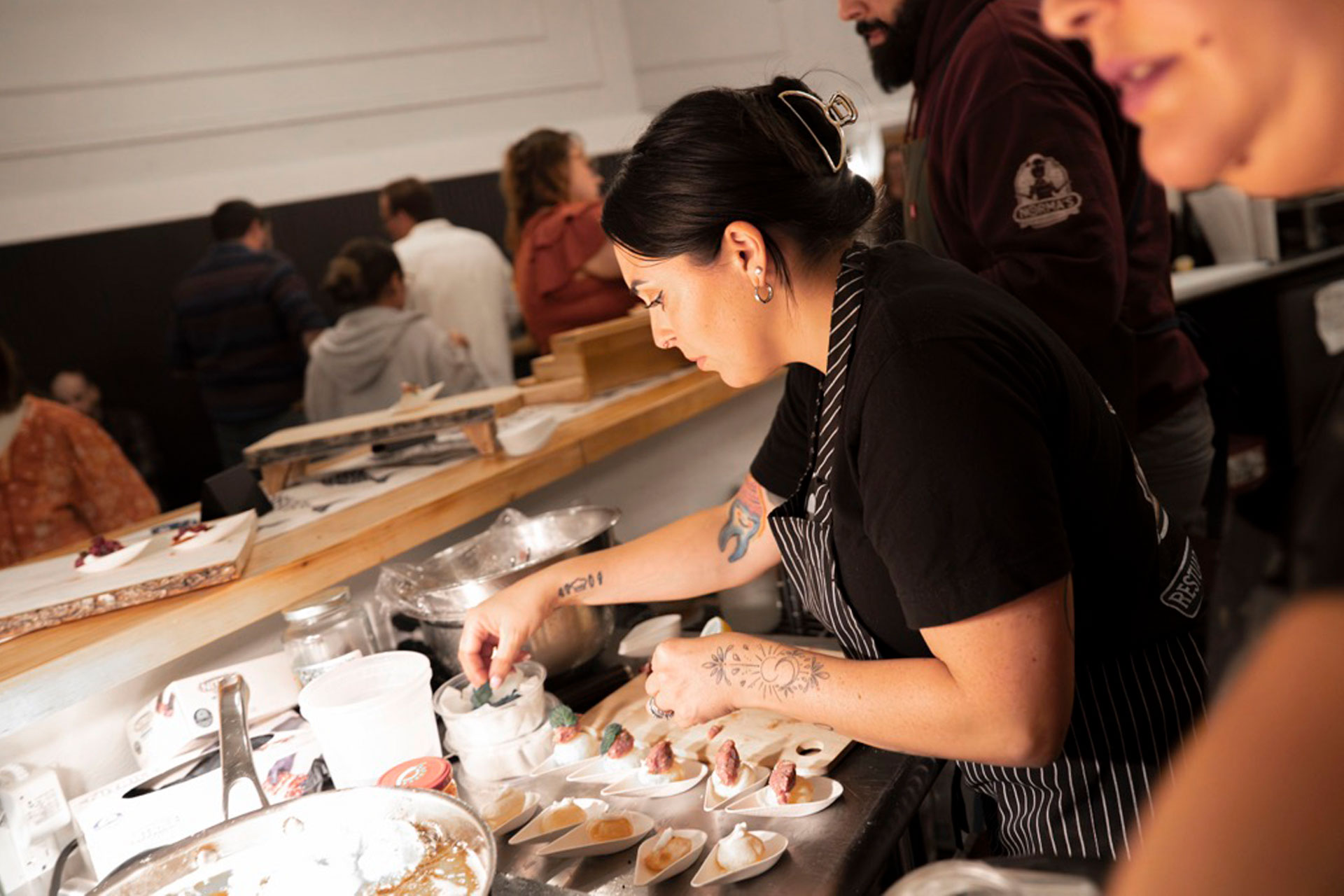
Take food waste. Winnow uses a camera and scale to track what a kitchen throws away and show cooks where the waste is coming from. During a rush, I can see the appeal of having that information without asking someone to stand over the garbage with a clipboard.
The back of the house is where this gets complicated for me. Restaurants are like baseball stadiums. Infields have some variation, but the bases are always 90 feet apart. Not to diminish the importance of excellent service, but I can train a server who has never set foot in my restaurant in 15 minutes to cover a shift in a jam.
Then you get to the outfield, foul territory, the seating, the concessions, even the parking lot. Every stadium has its own dimensions, quirks, and alleys. Kitchens are the same.
Hiring and training a kitchen employee, from a dishwasher to a prep cook to the person working the line, can be a nightmare. Kitchens are fast. There are a zillion moving parts. It’s one thing to know what to do in a particular kitchen. It’s a whole other thing to teach another human being, who may learn differently from you or speak a different first language, while tickets keep coming in. Suffice it to say that I treat my kitchen staff like royalty. Without them, I would have nothing.
Which brings me to a crossroads I didn’t expect to find while researching this article. Shift invites workers to mount a phone on a headset and record the work they already do. Its examples include food prep and plating. It advertises up to $30 an hour for recording time it reviews and accepts, though rates vary by task. Atlas Capture pays people to record everyday activities, including cooking, to train AI and robotics models. It also offers recording programs for restaurant groups.
I understand why someone would take the money. I also picture myself asking one of my cooks to put on a camera and film the hands that keep Norma’s running. Maybe the resulting technology will help that cook. Maybe it will one day make their hands replaceable. I don’t know. What I do know is that I’m not comfortable asking my staff to help find out.
And then there’s intellectual property. Whose work went into making all this possible? How much of it was taken without permission or compensation? I have complicated feelings about that, too.
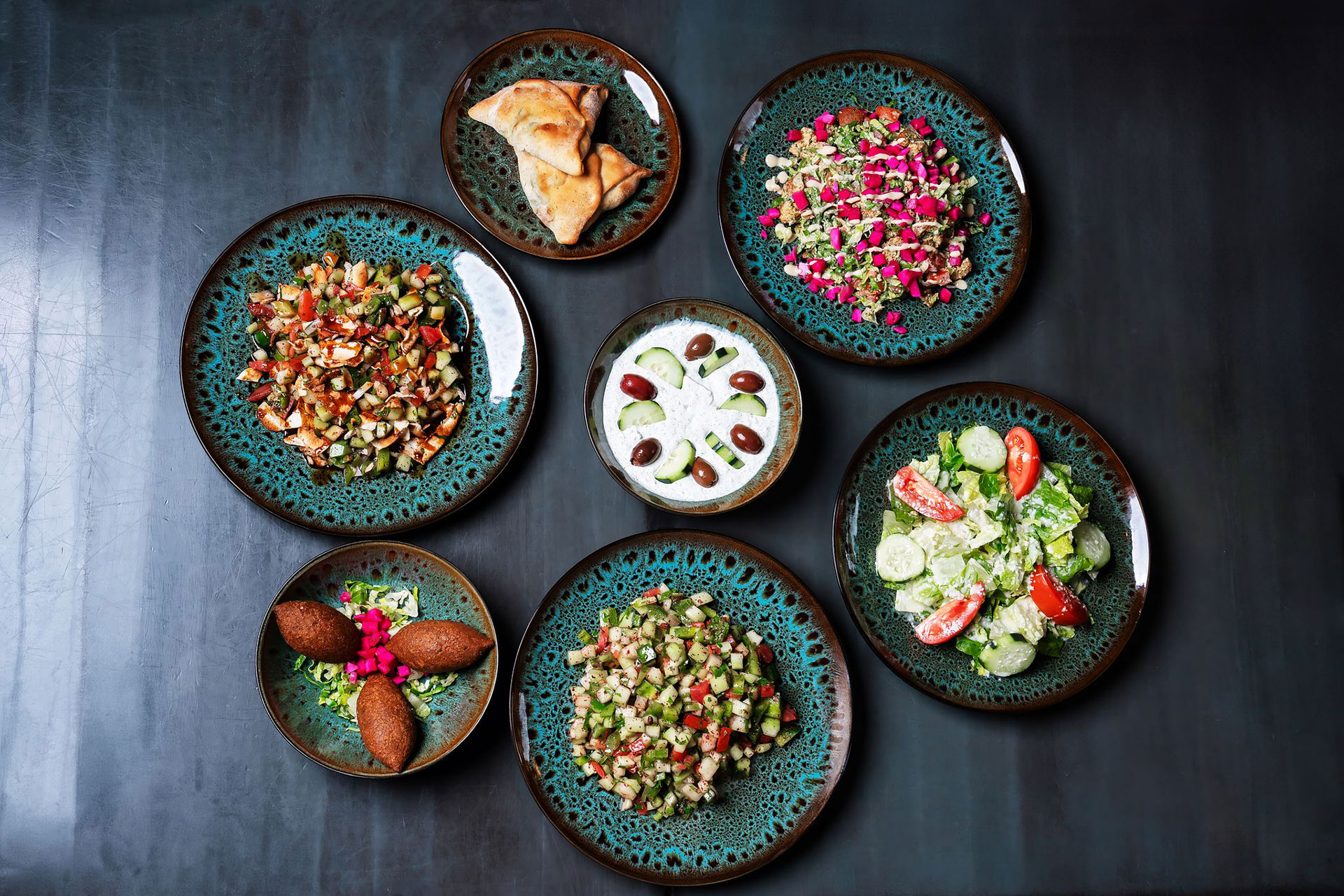
So here’s the question I keep coming back to like Donald Sutherland in JFK. Who benefits? Right now, AI saves my business time. A cook might earn money recording a shift, or the business might gain an additional revenue stream. At the end of the day, the companies that own the technology get the footage. What each of us gets from it ten years from now is the biggest unknown.
Norma’s is a success story, especially over the last 10 to 15 years. I’m happy to report that I hear some version of this all the time: “You guys were always great, but over the past few years, everything just seems to be getting better.” I’d love to give all the credit to my family and the loyal people on our team. They deserve a lot of it. But if I’m being honest, our measured use of restaurant technology has saved us time and money. We’ve chosen to spend those additional resources on the food and service those customers are noticing.
I recently spoke with Andy Schwartz, who is building Tandem, an AI tool for restaurant operations. He thinks it could “alleviate some of the manual repetitive administrative tasks” that owners and their teams handle. I thought about a recent week when I accidentally shorted one of my servers about $88 (or one Eric Lindros). I check the shifts and tips myself, then send a spreadsheet to our accountant. I made one mistake, and he had to call me to ask why his check was short. I’d gladly take another set of eyes on that spreadsheet.
In the final analysis, I would love to be a billionaire. The first benevolent billionaire, if at all possible. But I’m not going to get there by scaling Norma’s, because there is only one Norma. She is essential to this place.
Our restaurant has grown slowly, with intention. Our relationships with customers have developed over decades. Some of the most difficult pains in my ass have become friends and even family. You cannot speed up that process. You cannot replace patience in this equation. This is fermentation. This ain’t no quick pickle.
That’s my two cents. AI may soon prove its critics wrong, or it may kill us all and none of this will matter. But I’m writing this because I want us to have a say in how we use this impossible-to-define thing.
It is supposed to serve us, after all.

As a diehard Philly sports fan who’d choose A.I. over AI, Elias would like you to check out our picks for the best boutique hotels in Philadelphia.
Photography by Doug McConnell / McCo Media
In a world where we’re all craving more human connection, I believe this shiny new object will lose its luster quickly. Some things will remain and become part of our everyday lives (like checking spreadsheets for mistakes), and the scary stuff will get regulated or banned…that is, if it can be controlled. At first I was very anti-AI, but I’ve found myself playing around with it, mostly to see what the hype is all about. I’m not sure how this will all end but my hope is that humanity will prevail and restaurants like yours will continue to thrive because of the personal touches that only come from real human connections and hard work bring.
Great piece and I especially liked the part about having a human pick up the phone– that always has to be an option. Every great restaurant I know, fine dining or more casual or in between, every great place has the customer calls and employee answers the phone. Yet I can’t believe how many not-so-great restaurants think it’s fine to just cut that essential corner with the automated nonsense.
PS I want to come visit next time I am anywhere near there– I’ll call ahead!