

Watching a rocket launch at Cape Canaveral. Kayaking down a bioluminescent river. What could possibly go wrong? Our roving correspondent Yourgo Artsitas finds out first hand in Florida.

By Yourgo Artsitas
Journalist, Filmmaker, Tablet Contributor
Florida’s mixed reputation goes back centuries. Hernando de Soto, the legendary Spanish explorer who led the earliest European expeditions into the peninsula, described it as being “full of bogs and poisonous fruits, barren, and the worst country that is warmed by the sun.” Harsh.
Surely it’s not that bad. Spending a majority of my life west of the Mississippi, the idea that Florida is a ‘a paradise not worth the chaos’ has always vexed me. I can mention the beautiful beaches and Disney World and Key West and any other undeniably alluring aspect of the Sunshine State and always be met with a de Soto-esque: “Yeah, but it’s Florida.”
As I fly across the country to go stay with a friend on the state’s Atlantic coast, I can’t help but wonder: What do I not understand about Florida? I don’t know if I got a great answer to that question, but I did get a valuable lesson in managing expectations while on vacation. In Washington there’s a state park, usually shrouded in fog, called Cape Disappointment. On this trip at least, Florida was my peninsula of the same.
Explore our picks for the best boutique hotels in Florida.
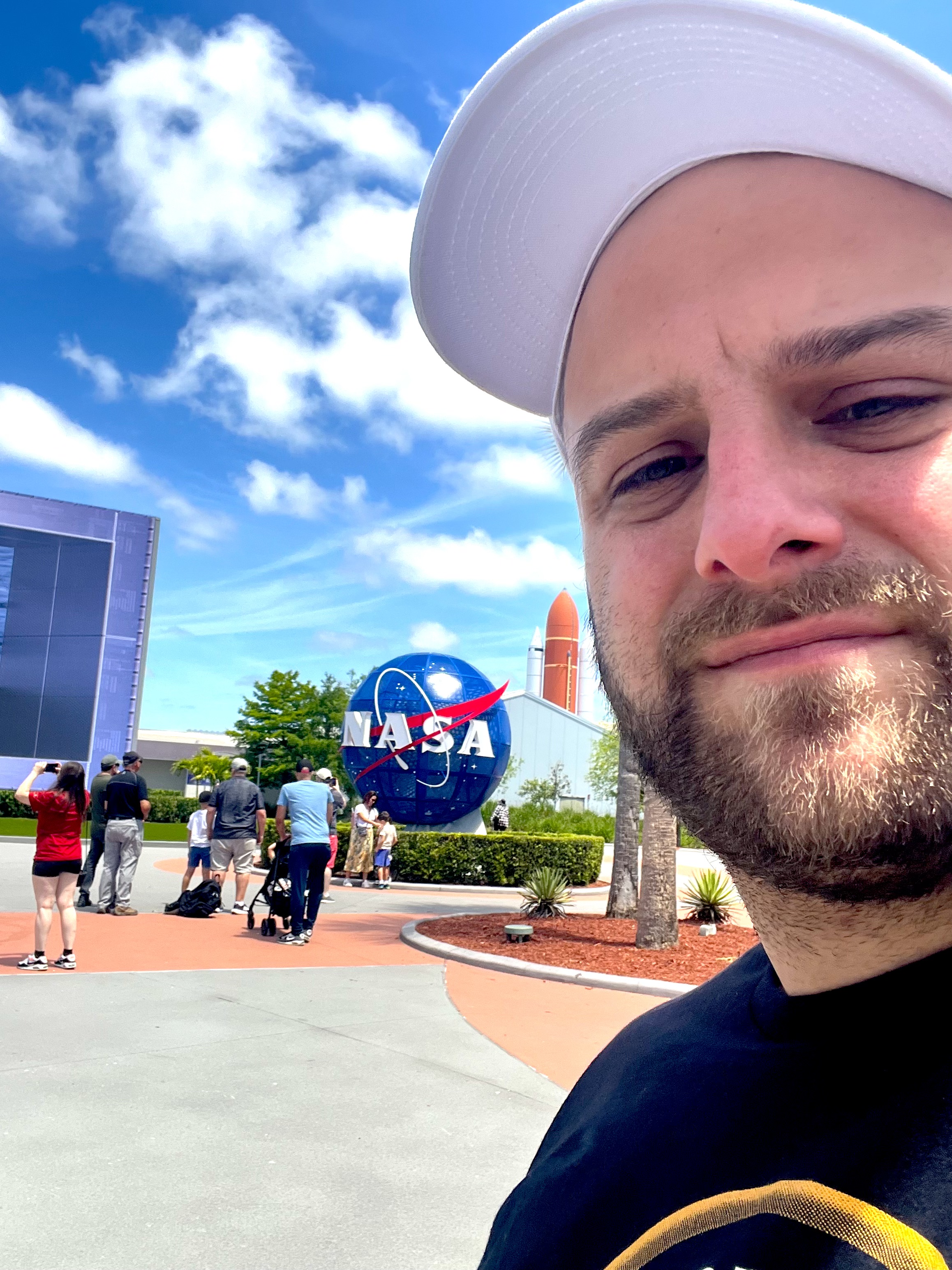
“Sometimes you can see the rocket launch really tiny in the distance.”
That sealed it. Unbeknownst to me, Cape Canaveral was within eye shot of where I was staying in Satellite Beach. As soon as my friend’s mom spoke those words, I had no excuse not to try and see a real-life rocket launch up close. Except for a paltry launch schedule. Fortunately, SpaceX has made rocket launches go from once in a blue moon to nearly weekly. And the next launch? Tomorrow.
But Houston, we may still have problems: these launches get scrapped constantly. Estimates have it at 30-50% getting cancelled. To get a really good seat, you’d have to go to Kennedy Space Center, which is not free. Worth the risk? Of course.
What NASA has done with Kennedy Space Center is extraordinary. After a few hours roaming, it’s impossible not to feel proud to be an American. It is American exceptionalism at its most well earned because it does, in fact, highlight when America was incontrovertibly exceptional.
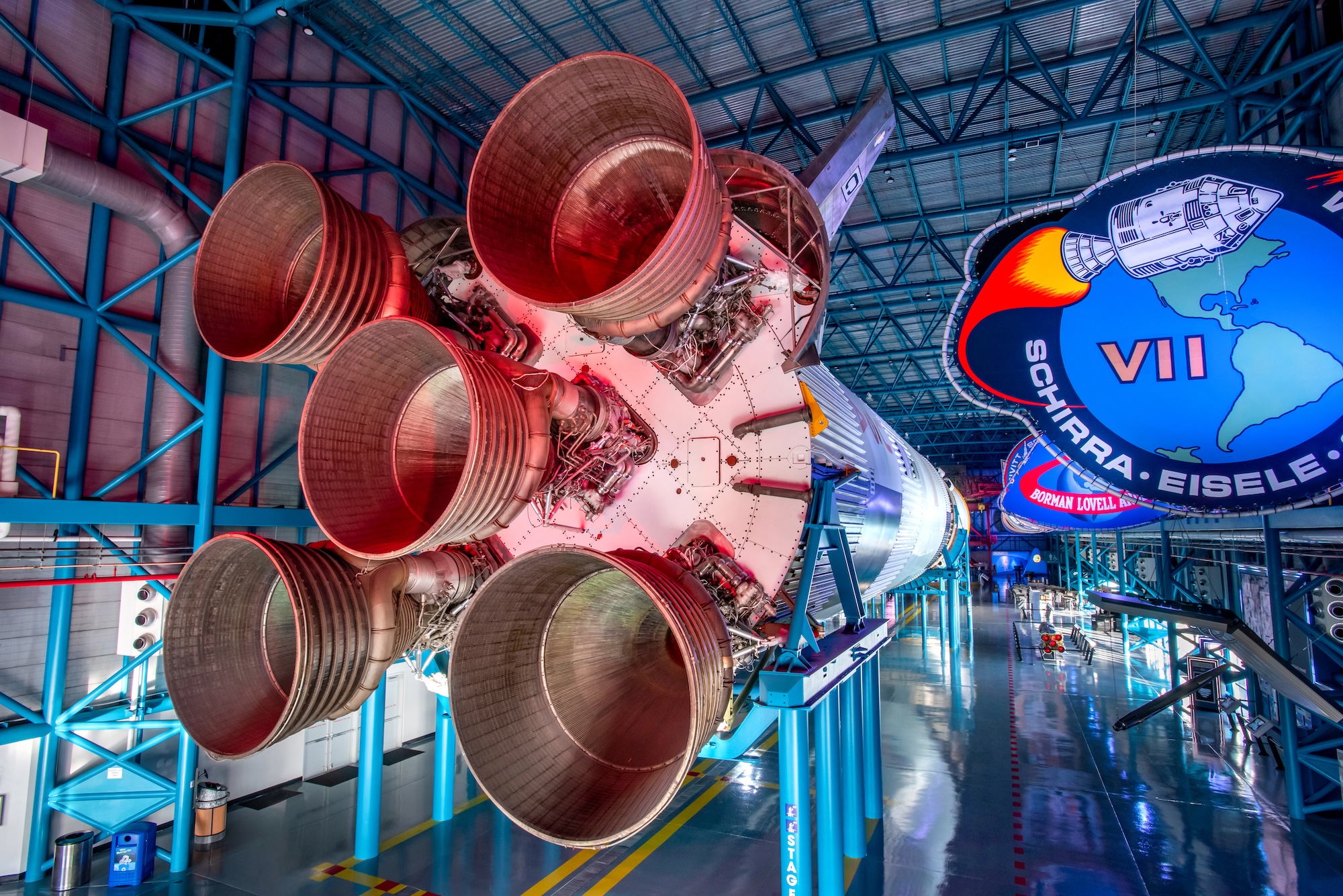
The headliner is the rocket primarily used for the Apollo moon missions, the 363-foot “Saturn V.” It’s so massive that NASA needed to build a custom structure just to house it. And it’s hanging from the ceiling so everyone can gaze at it as it was intended: from below.
It’s really easy to fill out the day at the ol’ KSC. Doesn’t a riveting reenactment of the Apollo 8 launch in a control room feel worthy of your time? Or a visit to see the world’s largest doors in the Vehicle Assembly Building? How would I know they’re 151 feet taller than the Statue of Liberty and take 45 minutes to open if I hadn’t taken the tour? And there’s a whole section about how astronauts defecate in space. We’re here, might as well. And throughout, the walls are lined with quotes from leaders and famous minds, triggering a personal, internal “U-S-A” chant.
After a short stint buying NASA oven mittens and some freeze dried ice cream, there’s roughly 30 minutes until launch. The fact it hasn’t been cancelled yet is a positive sign, but this last half hour I’ll have to sweat it out.
Us hopefuls get led into a grassy field with bleachers set up facing the launchpad. As families wander around to stake their claim to an open patch of grass, a live simulcast of the rocket plays on a giant screen. There’s an unspoken tension as I try to find a spot nearest to the railing.
A booming voice comes over the intercom and assures everyone that we will indeed be launching today. Everyone cheers. My investment paid off.
As I hear the voice use the term “t-minus” accurately for the first time in my life, anxiety switches to excitement. The voice begins to countdown. Everyone around chimes in like it’s New Years Eve.
3,2,1…
The sound hits us first. The fumes and heat make the rocket ripple in my vision like a mirage. Fuel starts to burn so bright it looks like a miniature sun is carrying the rocket spaceward (Apollo really was an appropriate name for the early space program). As the ship burrows through the blue sky, leaving a white track like the trailing smoke off a cigarette, I only have one thought:
It’s so small.
Standing roughly seven miles away from the launchpad, it’s hard to feel the grip of the spectacle. And the sight of the rocket, while impressive, is simply too far to be truly amazed by. I guess years of Armageddon, Apollo 13, Interstellar, and a host of other astronomy-centric movies have spoiled me. It’s wonderful to be able to say you’ve witnessed a rocket launch into space, don’t get me wrong, but I expected more.
So as I stare unimpressed at this marvel of American engineering, all I could think was: what else is there to do on Florida’s Space Coast?
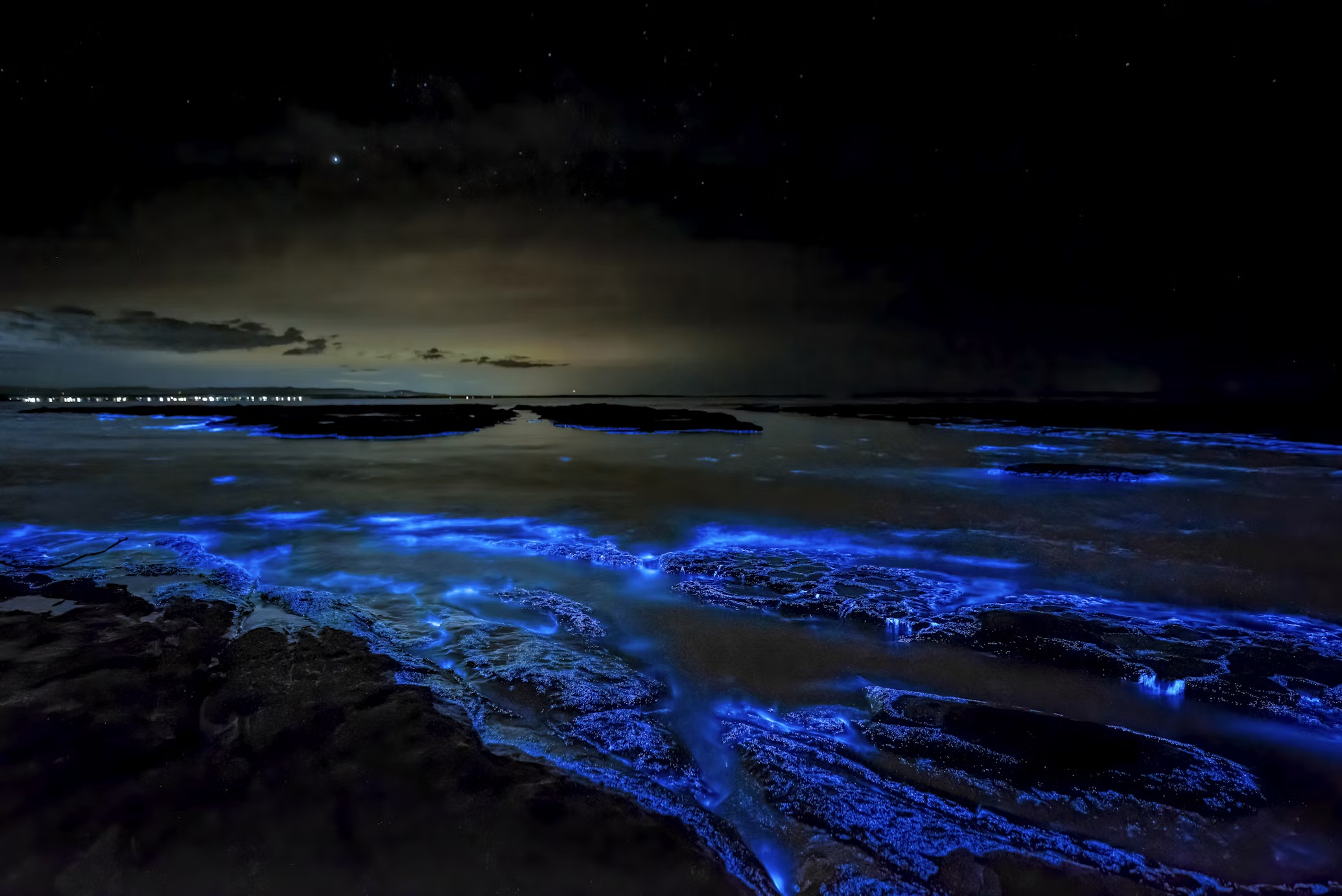
Bioluminescence.
Intimidating word, wonderful phenomenon.
Without getting bogged down in the science of it, bioluminescence is essentially when an organism lights up. Think what a firefly does. Or certain jellyfish. Some bodies of water have the right mix of environment and organisms near the surface that during the nighttime, it glows like the Las Vegas Strip. The Satellite Beach area is one of those places. And we’re in season.
As the sun begins to set, me and my pal Anthony (who had never seen bioluminescence before either) head north to Kiwanis Island. Kayaks and life jackets hang near a small, muddy inlet and immediately I’m happy we opted for the pricier see-through kayak. We were promised they’d be better for a full field of bioluminescence vision, and it’s clear (no pun intended) they will be.
A pair of early-20s guides rifle through some perfunctory instructions about flashlights and safety. As dusk starts to settle in, we get inside our tandem kayak. We’re asked to put the heavier person in the back and somehow politeness superseded wisdom and I sat up front. With my phone tucked inside a waterproof pouch on a lanyard, we embark.
We wait in the middle of Sykes Creek until the sun fully goes down. After the panic settles from the struggle to gain my balance, I look down for the first time. Nothing.
Our guides take us around the bend and show us the local vegetation. They tell us about the environment, the ecosystem, how bioluminescence works. Blah blah blah. I’m only half paying attention as I scan the water below me for a glow. Nothing.
There’s an overpass a short paddle away that usually produces solid colors because of how the shade cools the wildlife below. So we brave the current and head over. Nothing.
We paddle back towards where we cast off originally for one last hope at some underwater fireworks. Nothing.
As we cruise up to the loading area, it’s clear what we just experienced. We paid for a light show and got a 90-minute kayak ride. Nothing more, nothing less.
So as I sit there soaked inside a kayak, utterly disappointed despite being surrounded by an outdoorsman paradise, it clicks.
I finally understand Florida. It’s great. When it’s great.
Explore our picks for the best boutique hotels in Florida.

Yourgo Artsitas is an award-winning journalist and documentarian who reports from the field for Tablet Hotels. Subscribe to our newsletter to see his latest dispatches.