There aren’t many tourists today in Jericho, one of the world’s oldest inhabited cities, but its numerous Biblical landmarks and Bronze Age ruins are maintained nonetheless, cared for by a quiet few.

By Kate McMahon
Journalist, Photographer, Fireplace correspondent
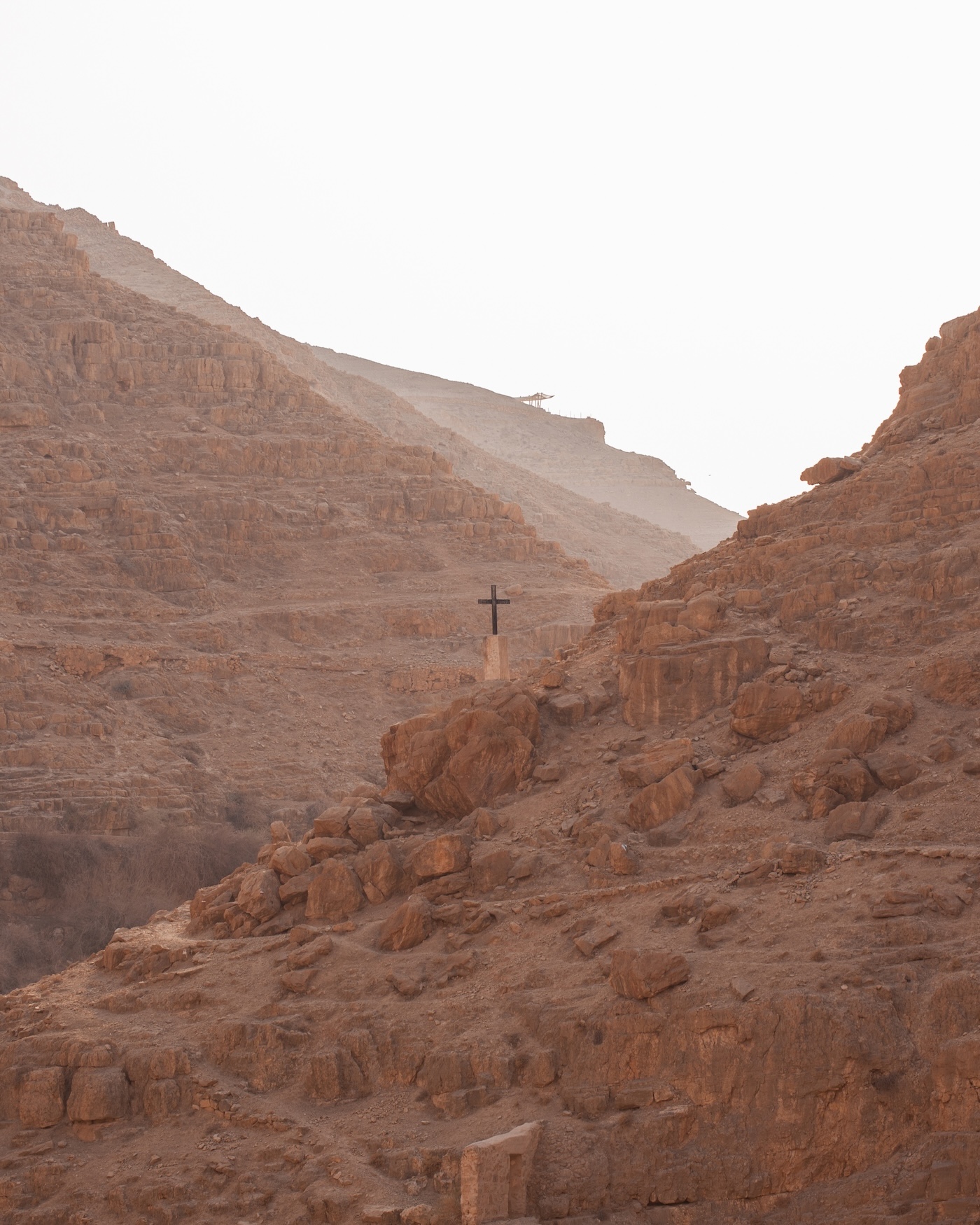
Climbing the barren trail to the Mount of Temptation, I stop to watch blackbirds and green bee-eaters circle above the desert cliffs. Halfway up, a Palestinian woman, shocked at the sight of a visitor, sells me a freshly squeezed and bitter pomegranate juice. Her surprise is well founded; there are few tourists in the West Bank these days.
The crumbling cliffside overlooks the Biblical city of Jericho. Located 250 meters below sea level, the ancient city stretches across the desert horizon before reaching the Dead Sea. I’m not trekking up the mountain for the panoramic views, but the monastery. According to Christian tradition, this cave is the site where Jesus fasted for forty days and forty nights while tempted by the Devil. A Greek Orthodox Monastery, chiseled into the limestone rock in 1895, commemorates the story.
But, after the final push to the monastery, I am alone, spare a single Palestinian security guard and a rather eccentric Orthodox priest, or a monk, I’m not really sure. The holy hermit instructs me to leave my phone outside as I enter the chapel and brush my hand against a Biblical rock, believed to be the stone Jesus rested upon. More starlings, with orange patches on their wings, flutter outside a narrow opening in the stone that casts light across the otherwise dark cave.
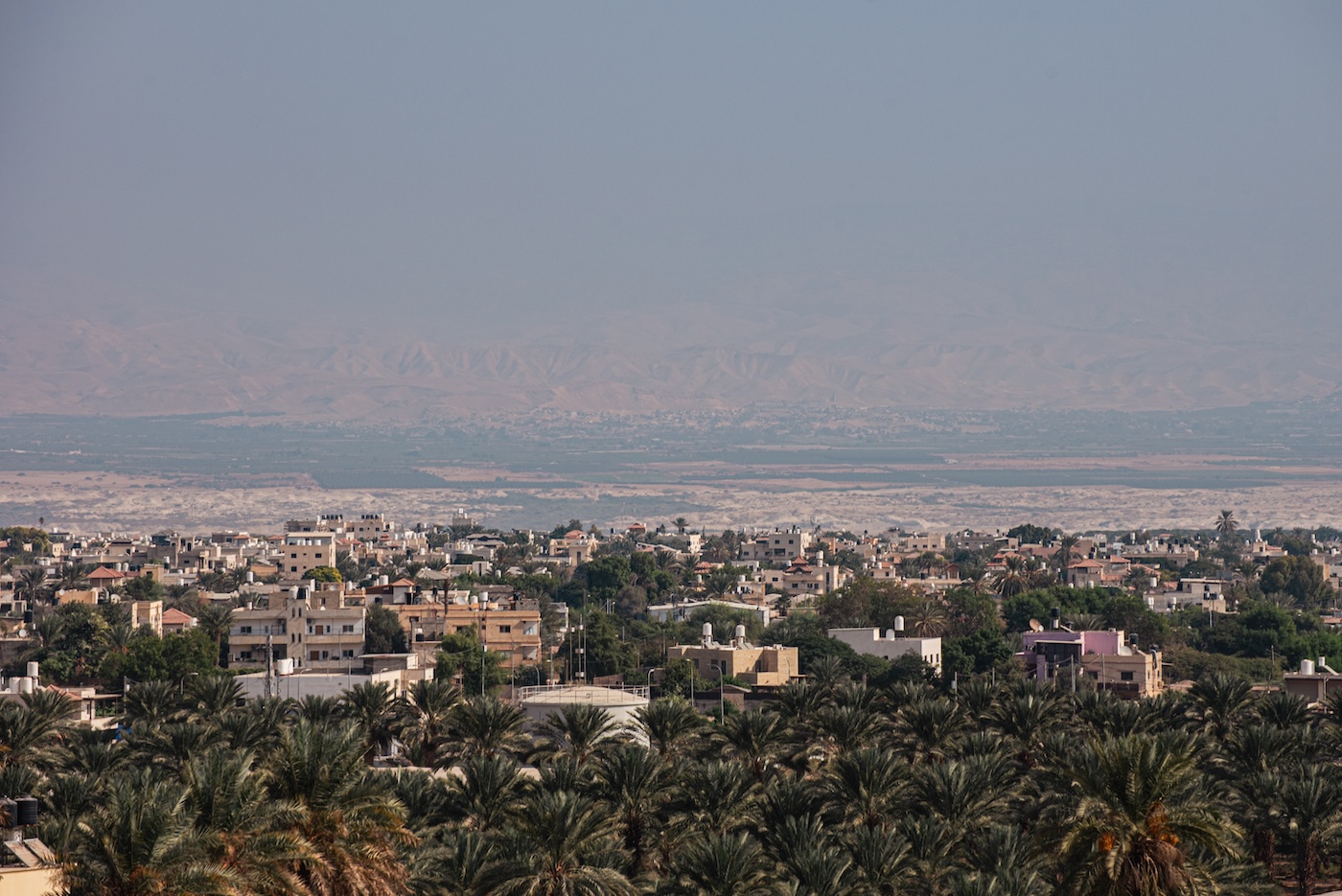
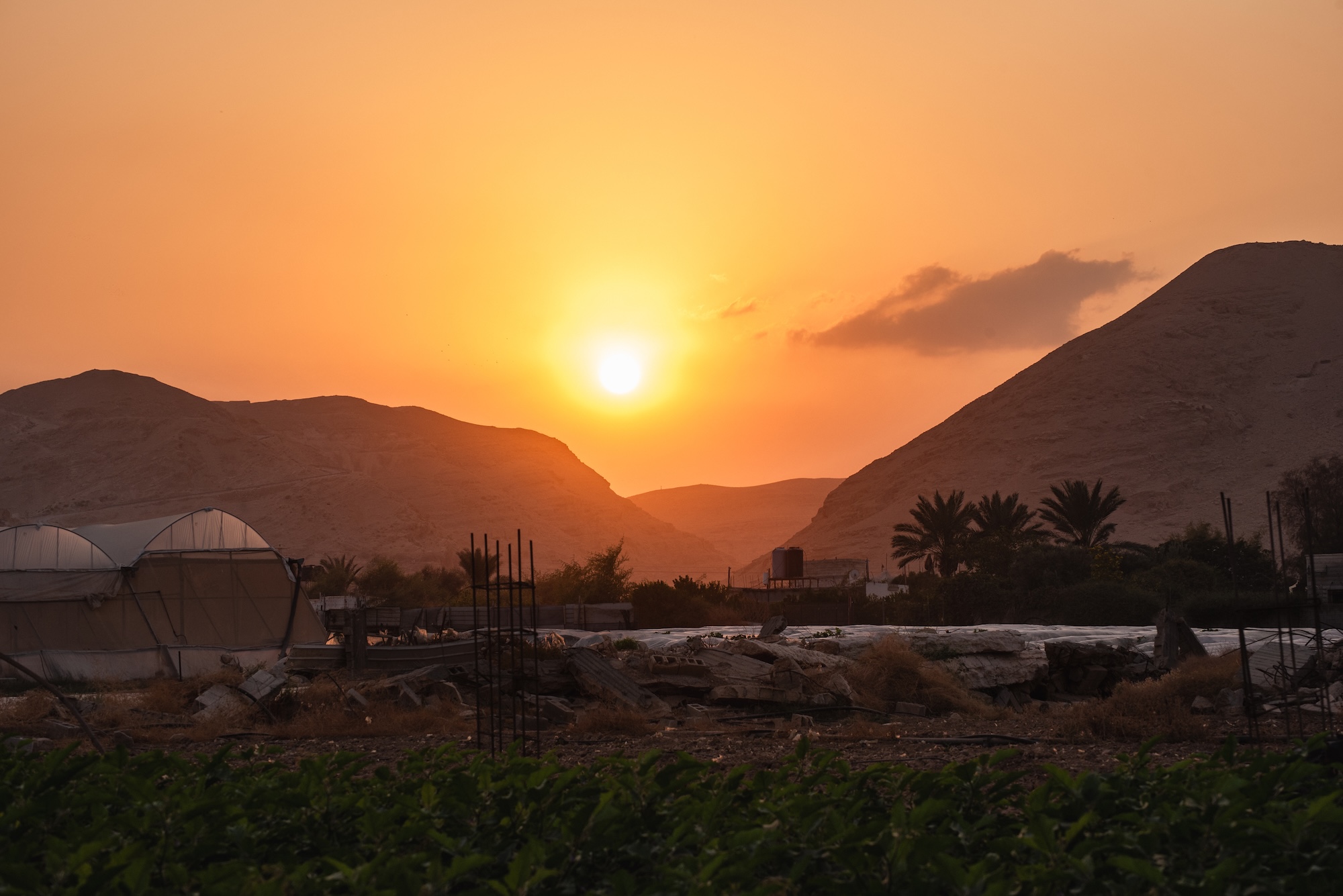
I can just glimpse out at the region known as Palestine’s breadbasket. Below the cliffs, natural springs irrigate the farmland, and rows of date palm trees and greenhouses punctuate the landscape. The oasis has sustained agriculture and human settlement for roughly 11,000 years.
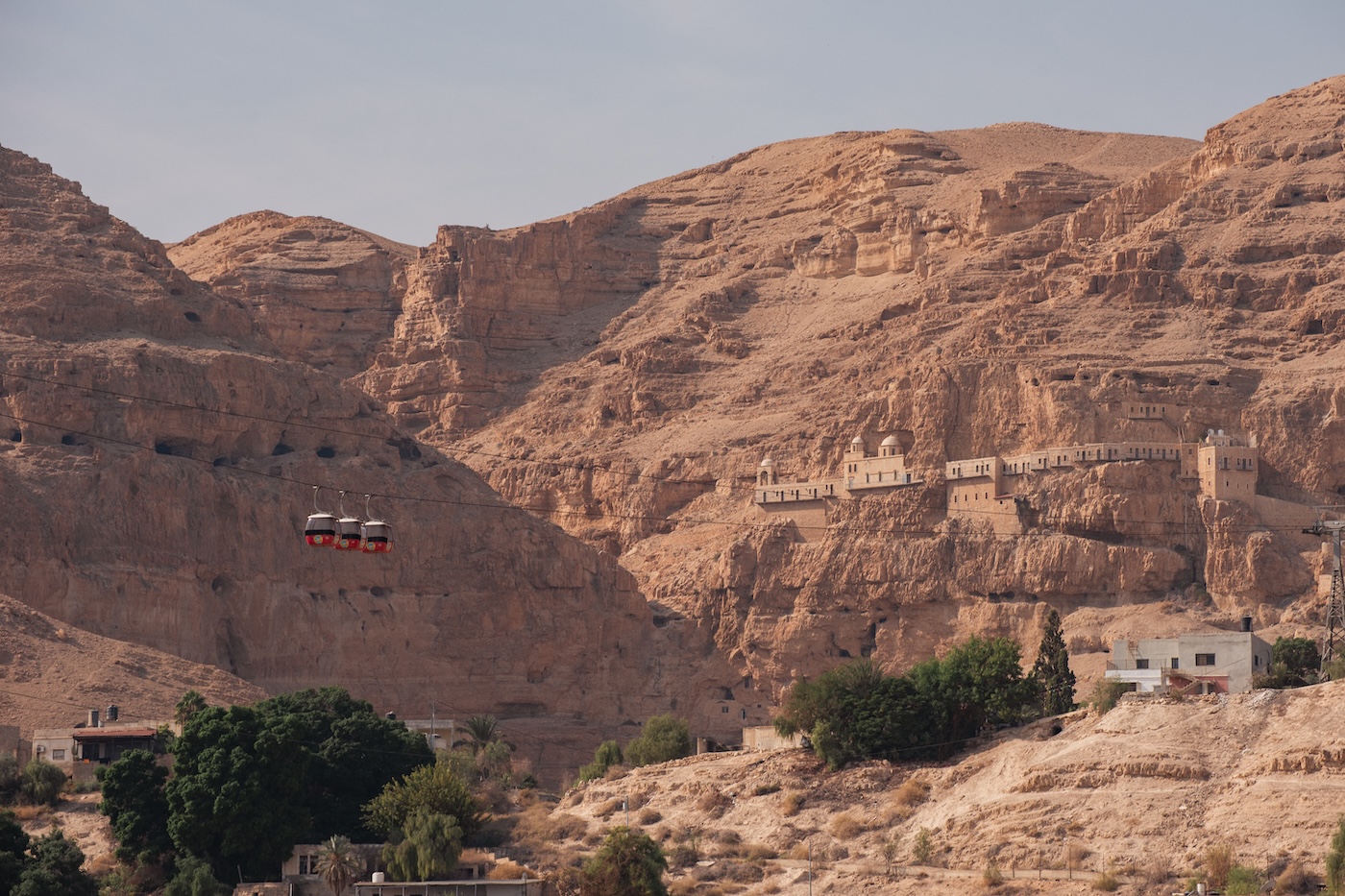
Yet today, in a region marred by conflict, the world’s oldest continuously inhabited city is empty. The shops are shuttered. The cable car propels forward without passengers. The ruins are dusty from the lack of visitors rather than the forward march of time. The city is revered in Christianity, Judaism, and Islam. But now it sits forgotten. The Palestinian Ministry of Tourism and Antiquities charges forward nonetheless, safeguarding the abandoned sites despite the obstacles imposed by occupation.
When I visited, the only still operating B&B in town — The House of the Eggplants — was locked, and I contacted the manager on WhatsApp; he came and opened the iron gates to reveal an oasis fit for the region’s history: a villa in a lush garden brimming with olive trees and figs and jasmine. I sat alone on the porch swing and watched the swallows and ate fresh fruit plucked from the garden. For a while, I felt suspended in another time. I was alone for three days, except when the manager delivered bread and hummus. Palestinians adamantly feed their guests, a people of endless hospitality.
Beyond the refuge of garden gates, the city is marked by a collision of empires. History is tangible here, and I feel it in the air and under my feet: A Roman ruin here, a Bronze Age fortification there, an Islamic palace, and an abundance of archeological mounds still waiting to be excavated, if the funding ever returns. The city has been inhabited by so many different peoples that its history is less a single narrative than a succession of overlapping civilizations.
Around 9,000 B.C, Neolithic hunter-gatherers arrived in the area, gradually establishing permanent settlements and adopting agriculture. By the Bronze Age, around 2000 B.C., Jericho had transformed into a major Canaanite city and regional trading hub. It’s then the setting for the biblical parable of Jericho’s walls crumbling, though archaeologists have yet to unearth evidence to verify the tale’s veracity. Under Roman rule, the city served as a wealthy winter retreat. Later, the Islamic Umayyad dynasty added another layer to history.
At Tell es-Sultan, a UNESCO World Heritage site built around the remains of Jericho’s earliest settlement, I watched a short film in the empty visitor’s center, tracing the history of archaeological excavations here. Outside, scattered trails lead to deep holes and exposed stone from the Bronze Age. A tattered USAID poster for a funding project, now defunct, laid on the ground. I read about violent conquests of the city on dusty signs: Assyrian, Babylon, Roman.
But the city’s latest historical chapter may be its most turbulent. Palestinians battle impossible odds to keep the sites open. The tourists have vanished. So, too, has interest in the sites themselves. There are no foreign archaeologists or academics queuing to get a glimpse at some of the world’s most significant ruins.
Instead, trash fills the streets. There is a noxious smell throughout the city. Residents say that, across the West Bank, adequate waste disposal has been a major challenge. I walk through a dirt path behind the city, winding around crops and waste before reaching the Roman Emperor Herod’s Winter Palace. Skinny street dogs growl from beyond the mound, they too are uneasy at the sight of a visitor. It feels as if history itself is forgotten here.
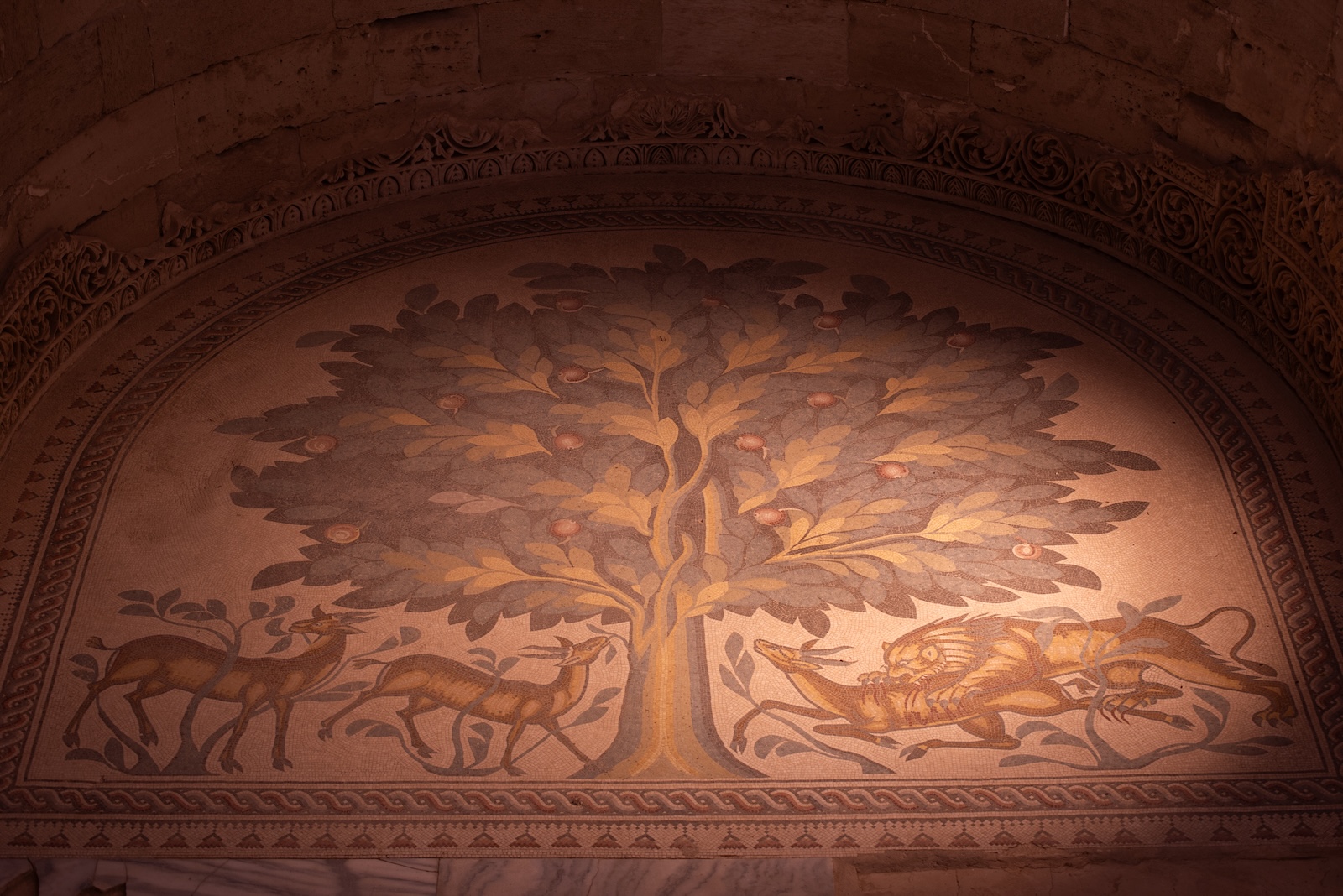
Yet at Hisham’s Palace, an 8th-century Islamic winter palace, the floors still serve as some of the finest examples of mosaics, and the desert dust is miraculously kept away. This is the site of the legendary tree of life mosaic: a lion chases fleeing gazelles under a tree, the figures cut, carved, and cemented piece by piece onto the palace floor. But, on the day of visit, across the palace grounds, an artist is crafting new mosaics in a small workshop. There’s a sign to enroll in a class with him. I take my time exploring the complex of scattered ruins over three hours, and no one else comes. He stays open anyways, surely long after I leave.