
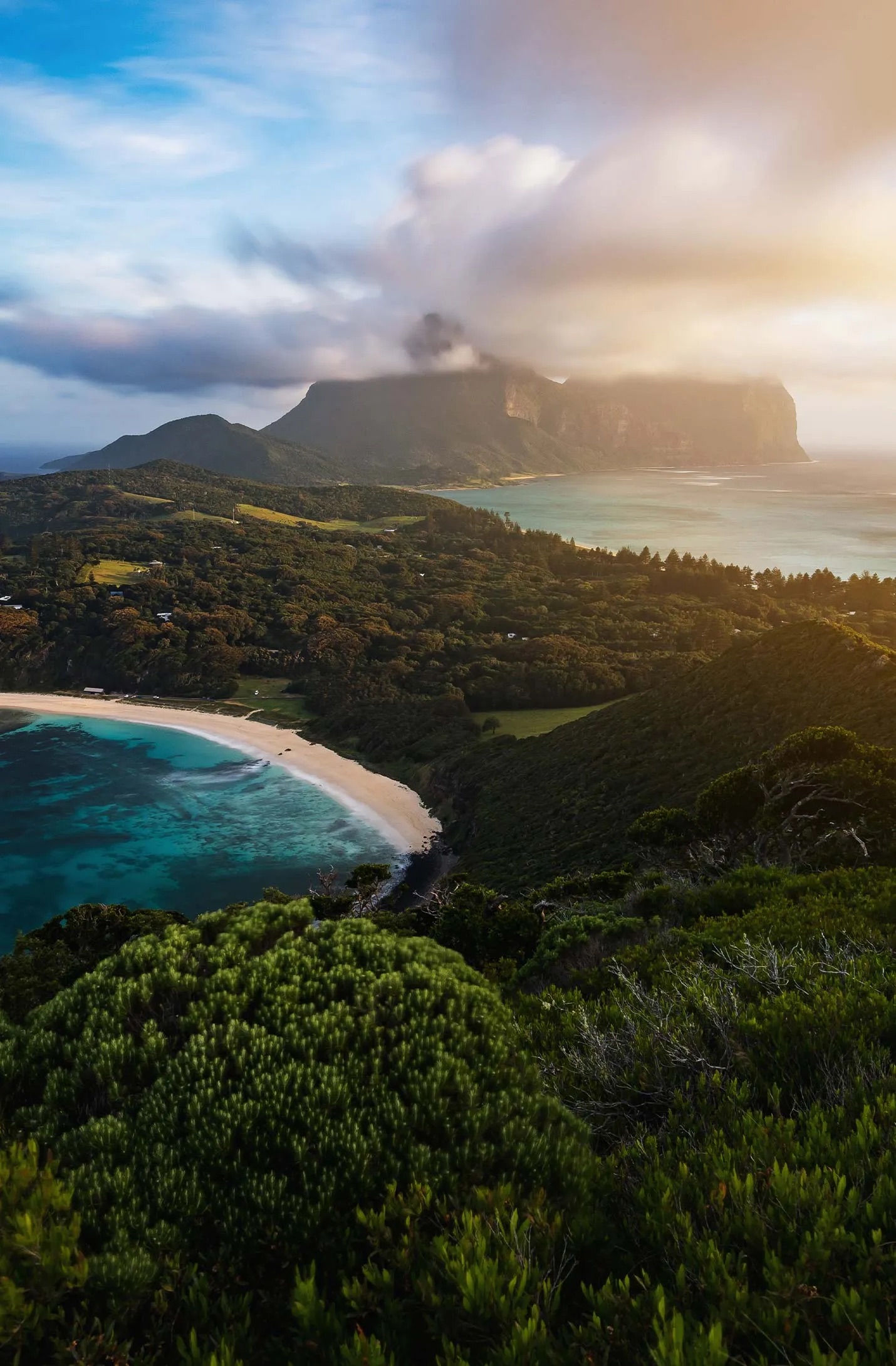
Often called Australia’s real-life Jurassic Park, Lord Howe Island restricts visitors to only 400 at a time, preserving a collection of wonders and wildlife not found anywhere else on earth.

By Alli Forde
Travel writer, Oceania expert, Fireplace contributor
PART ONE: THE REAL-LIFE JURASSIC PARK
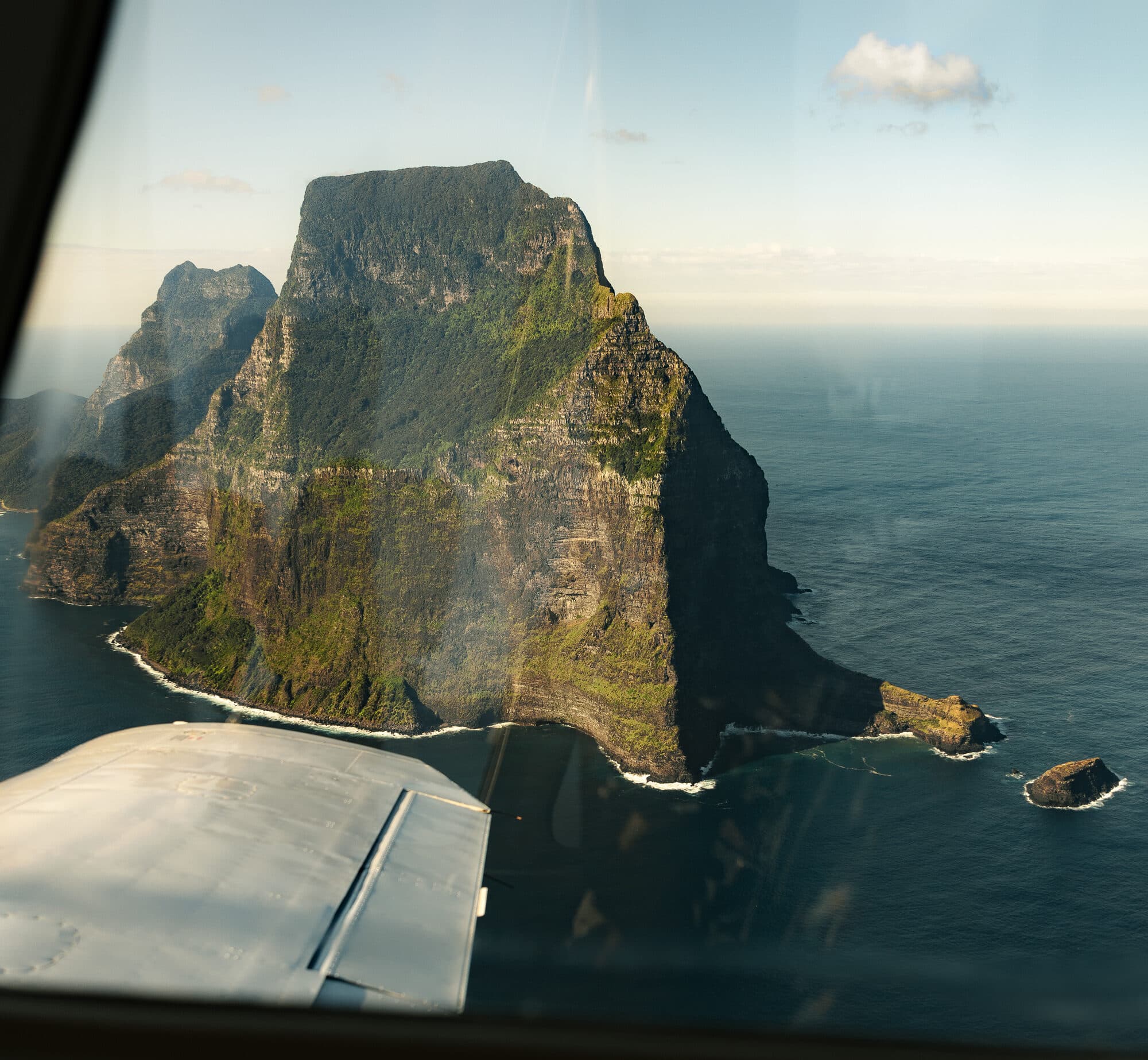
I can almost feel my butt cheeks unclench the second the wheels of our tiny commuter plane screech down on Lord Howe Island. The eight-seater plane is no larger than an Escalade and our pilot looks to be about twelve. He assures us before takeoff that he is not still in flight school, despite his youthful appearance. I’m trying to remember the last time I updated my will when the island comes into view, its crystalline reef giving way to the volcanic peaks of Mounts Gower and Lidgbird.
370 miles off Australia’s east coast, this largely untouched speck in the Tasman Sea is routinely described as real-life Jurassic Park. The remnant of a seven-million-year-old volcano, Lord Howe is UNESCO World Heritage-listed and home to an extraordinary concentration of plants, birds, and marine life found here and nowhere else on Earth. This prehistoric landscape is inconvenient to visit by design — the welcome mat rolled out to only 400 visitors at any given time, alongside a permanent population around the same number.
My host, Kylie, is a sixth-generation islander. Lord Howe today remains something of a family affair, with many residents descended from the American whaling captains, Irish housemaids, and seafaring opportunists who arrived here in the middle of the 19th century. On the drive from the airport to my accommodation, Kylie greets literally every person we pass. We reach the charming timber beach shack I’ll be staying in. She tells me there’s no key, but I won’t need one.
Explore our picks for the best boutique hotels in Australia.
PART TWO: ISOLATED CHALLENGES
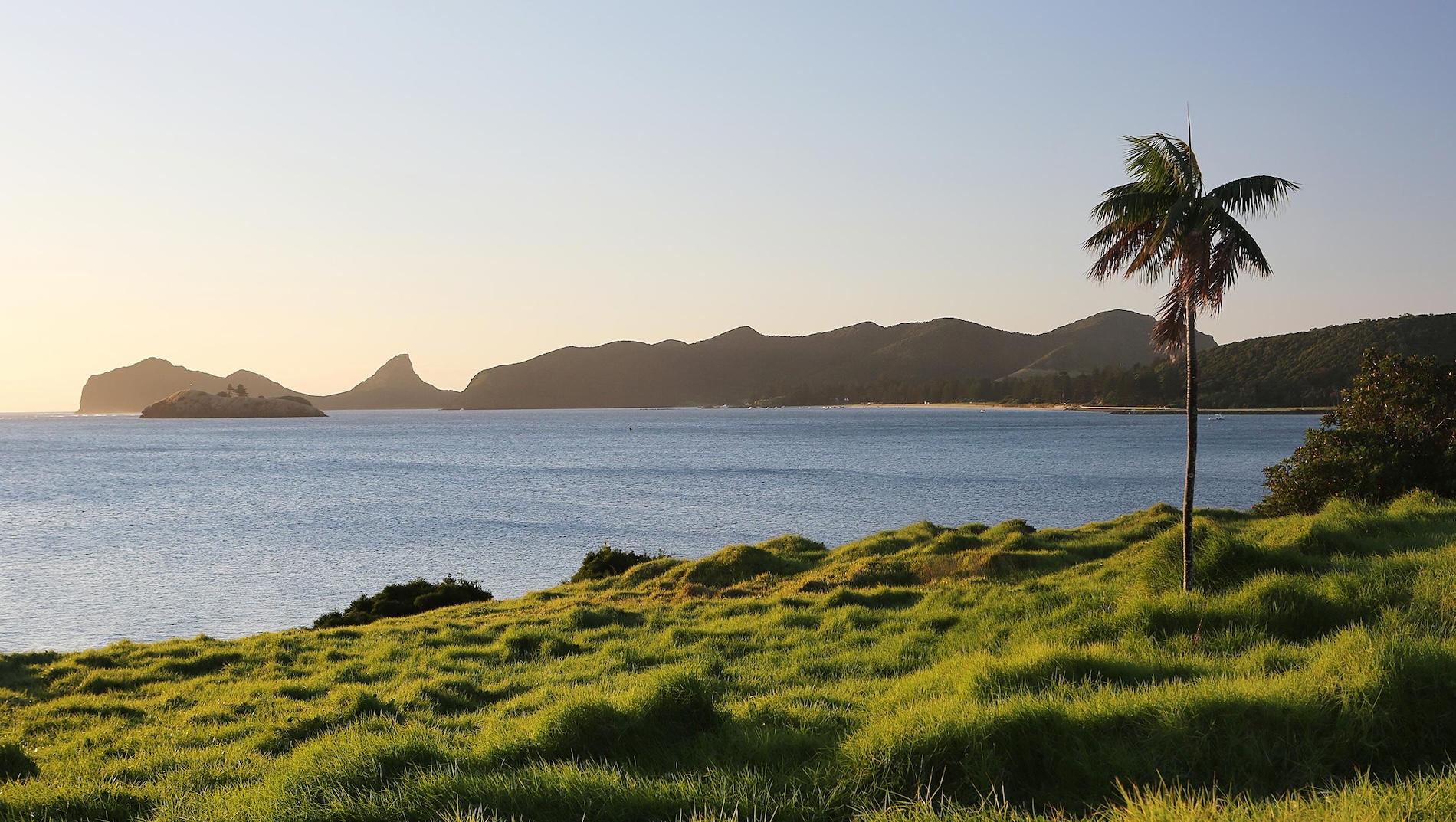
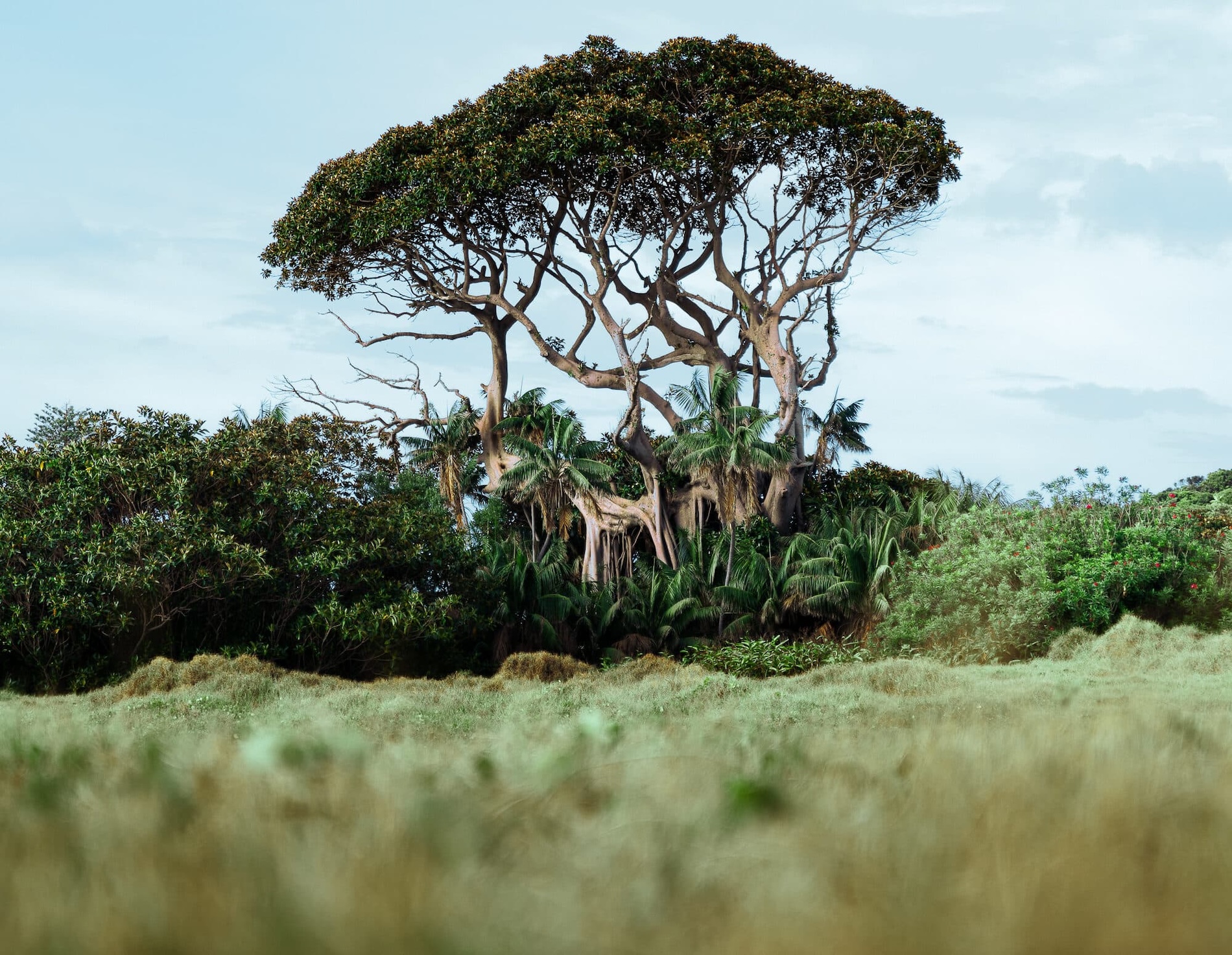
Cars are relatively few here, with bikes the preferred mode of transport. I’m pedaling mine along an empty road through a tunnel of Kentia palms, drawn toward the two peaks at the island’s southern end. I cycle until I reach the base, only encountering a handful of cows and a gaggle of barefoot school children on my ride. There’s no real town center but rather a modest cluster of civic necessities: three churches of different denominations, a couple of shops, and six restaurants.
I bike back for dinner at Driftwood. The food is fresh and delicious — a miraculous feat when you consider the only supply ship for the island visits once a fortnight, where its cargo is inspected by sniffer dogs to protect the island’s unique biodiversity. I order the fish of the day, figuring it had the shortest commute. The next morning I meet Timmy Maxwell, who rents a pair of stunning private residences called Island House. The two Scandinavian-inspired houses are impeccably designed. No small feat given that all the building materials had to arrive here by boat.
Maxwell is also behind Lord Howe Island Brewery. The beer is so good that I ask why they don’t bottle it for the mainland. He explains that expanding production would compromise their commitment to sustainability. I’m charmed by this response and the idea of a business that doesn’t aspire to become a much bigger business. Back home, we’d call that leaving money on the table.
PART THREE: A FAMILY AFFAIR
This apparent indifference to growth begins to look like an island-wide philosophy. I spend an afternoon with Peter of Chase ‘n’ Thyme, an encyclopedic local guide who married an island girl, a Thompson, whose family stretches back 175 years. When someone asks how one might go about moving to Lord Howe, Peter offers the most practical advice: marry an islander. The land is tightly held, rarely sold, and almost always passed down through generations. This isn’t a place where a billionaire can swoop in and build a holiday compound.
Living here comes with an expectation that you’ll participate in the community and, ideally, make yourself useful. Just ask Gower Wilson, the octogenarian who still milks his cows twice a day, delivers milk around the island, works as the local mechanic, and has been known to refuel the occasional plane. Residents tend to wear many hats as there just are not enough heads to go around.
One night, I head to the beach to witness the return of the mutton birds, one of Lord Howe’s great seasonal spectacles. They are graceful, capable navigators over the open ocean, only to completely and utterly fuck up the landing. I discover this firsthand when a wayward mutton flies directly into my face, knocking me off my bike. A group of dedicated twitchers who have gathered on the beach seem relieved that the bird is unharmed.
PART FOUR: CAPELLA LODGE
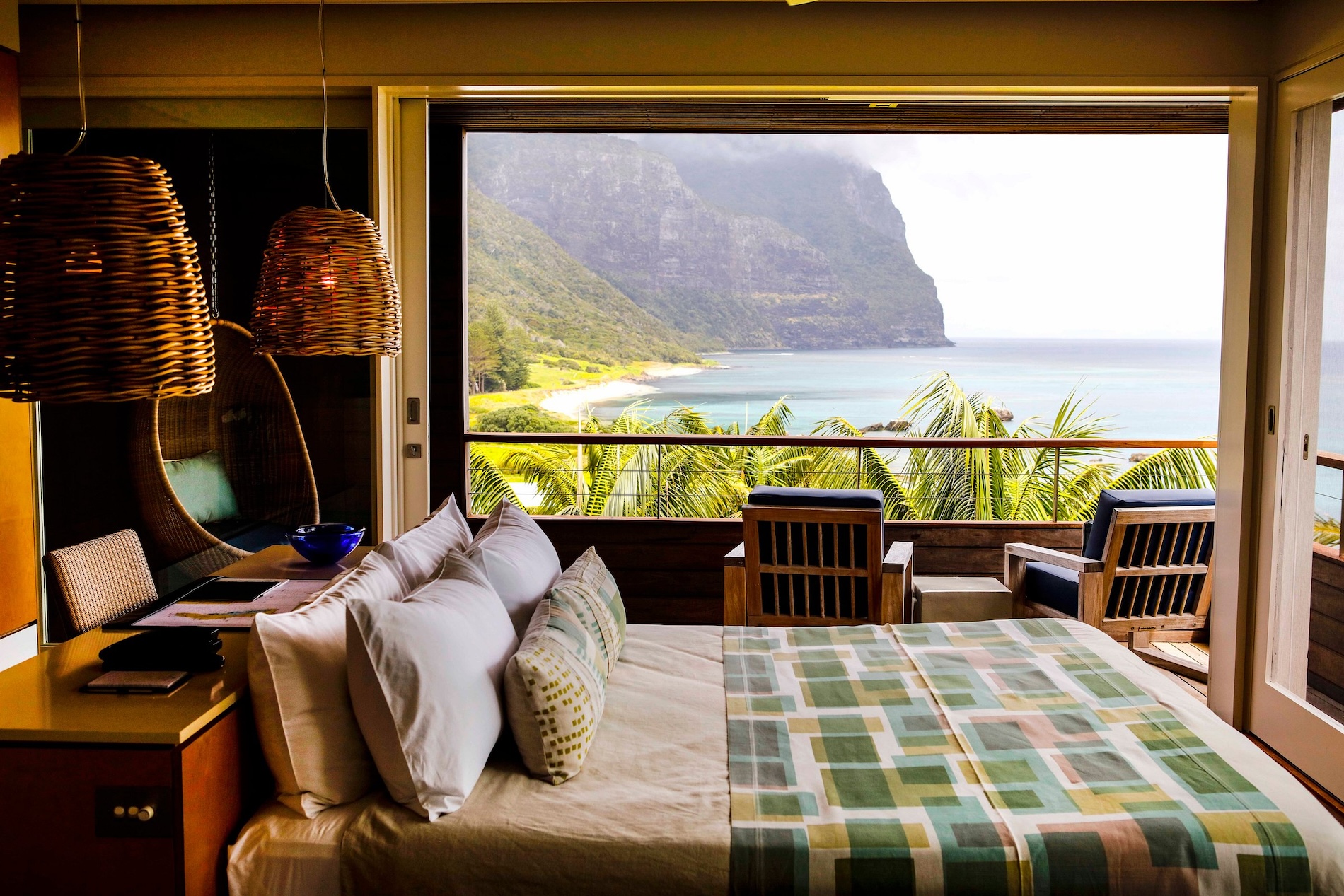
The following morning, I visit Capella Lodge, the island’s premier luxury retreat, whose screensaver good looks are every bit as impressive in person. With the dramatic positioning of a villain’s lair, it sits at the island’s southernmost end, those magnetic peaks filling practically every available window. Rates start around AU$2,000 a night, which is one way of ensuring the island never develops a see-and-be-seen problem.
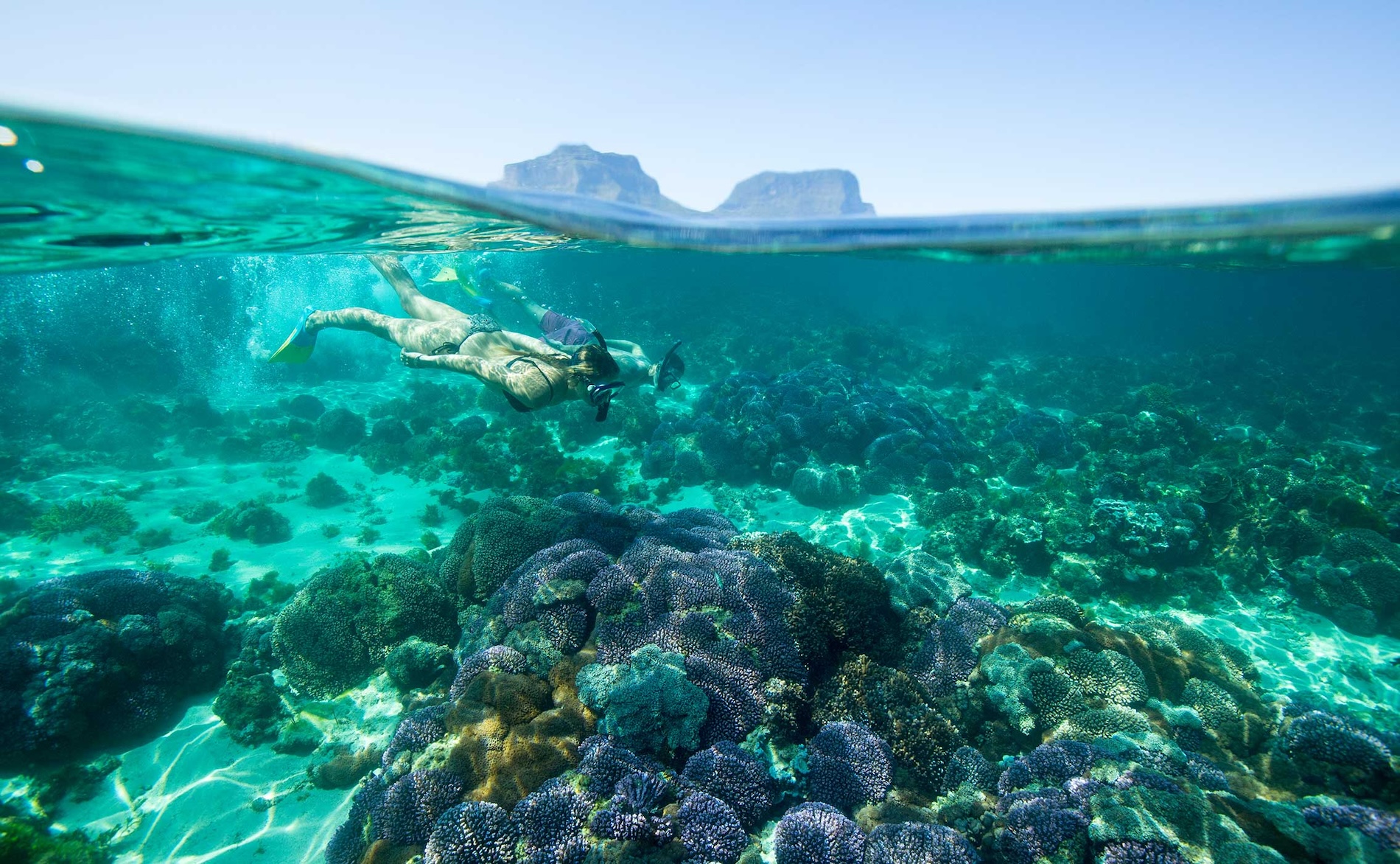
There are spectacular places to stay and excellent meals to be had, but the island’s most compelling luxuries are pleasantly old-fashioned and mostly free: leaving your door unlocked, grilling a fish pulled straight from the ocean, honesty boxes for snorkel and golf, and even being assaulted by the occasional rare seabird. There are no crowds to escape because they were never allowed to arrive in the first place.
Lord Howe has resisted the usual bargain beautiful places are forced to make: becoming easier to reach, easier to consume and, eventually, less like themselves. The tyranny of distance and isolation, often treated as problems to be solved, turn out to be the very things that have spared this magnetic little speck of rock from becoming a victim of its own appeal. A few days in paradise, and I’m pleased to report that my butt cheeks have never been more unclenched.

Explore our picks for the best boutique hotels in Australia.