

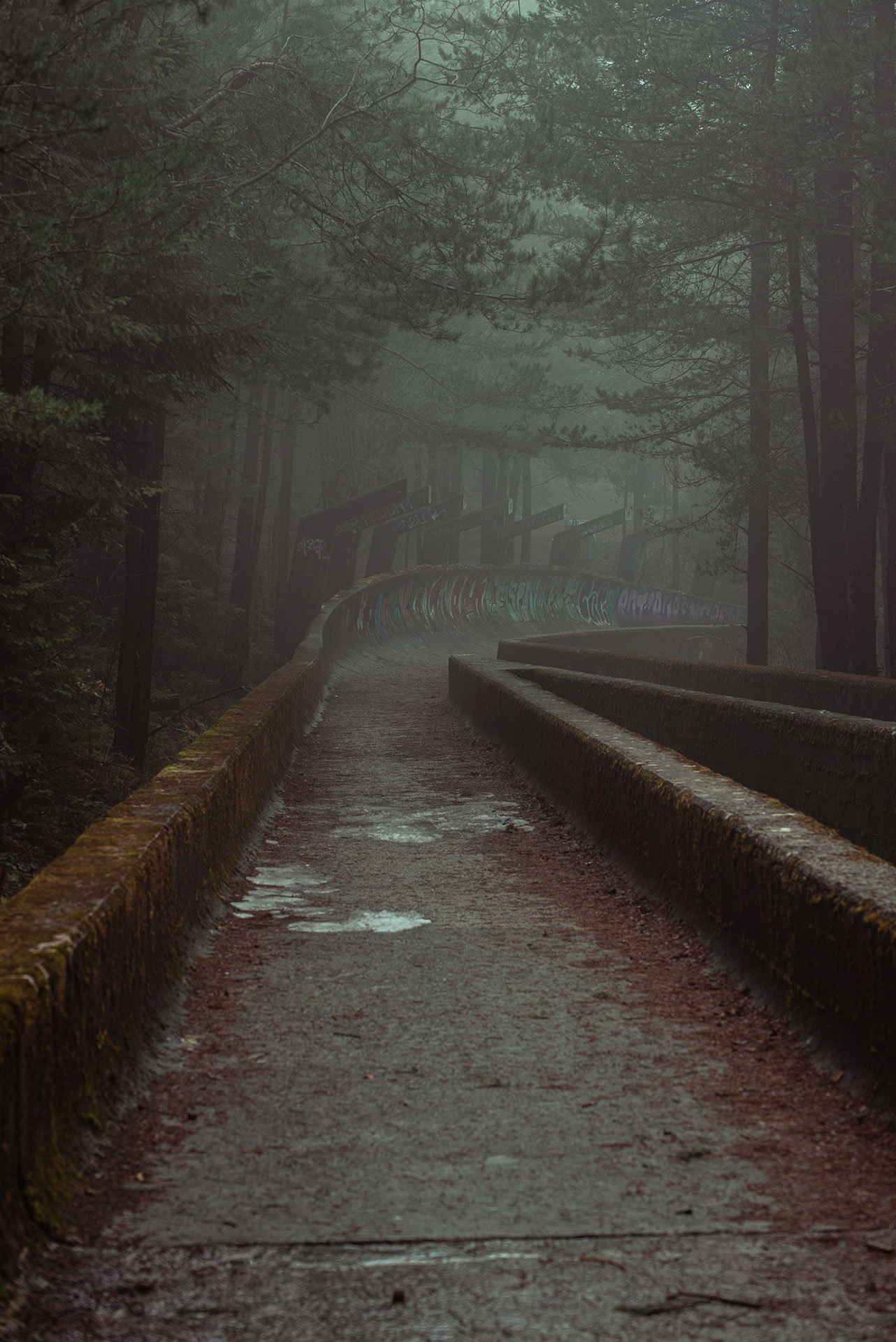
Eight years after hosting the 1984 Winter Olympics, Sarajevo was a war zone. Today, blood-red flowers splashed on sidewalks and streets remind a new influx of tourists of the city’s violent past.

By Kate McMahon
Journalist, Tablet Contributor
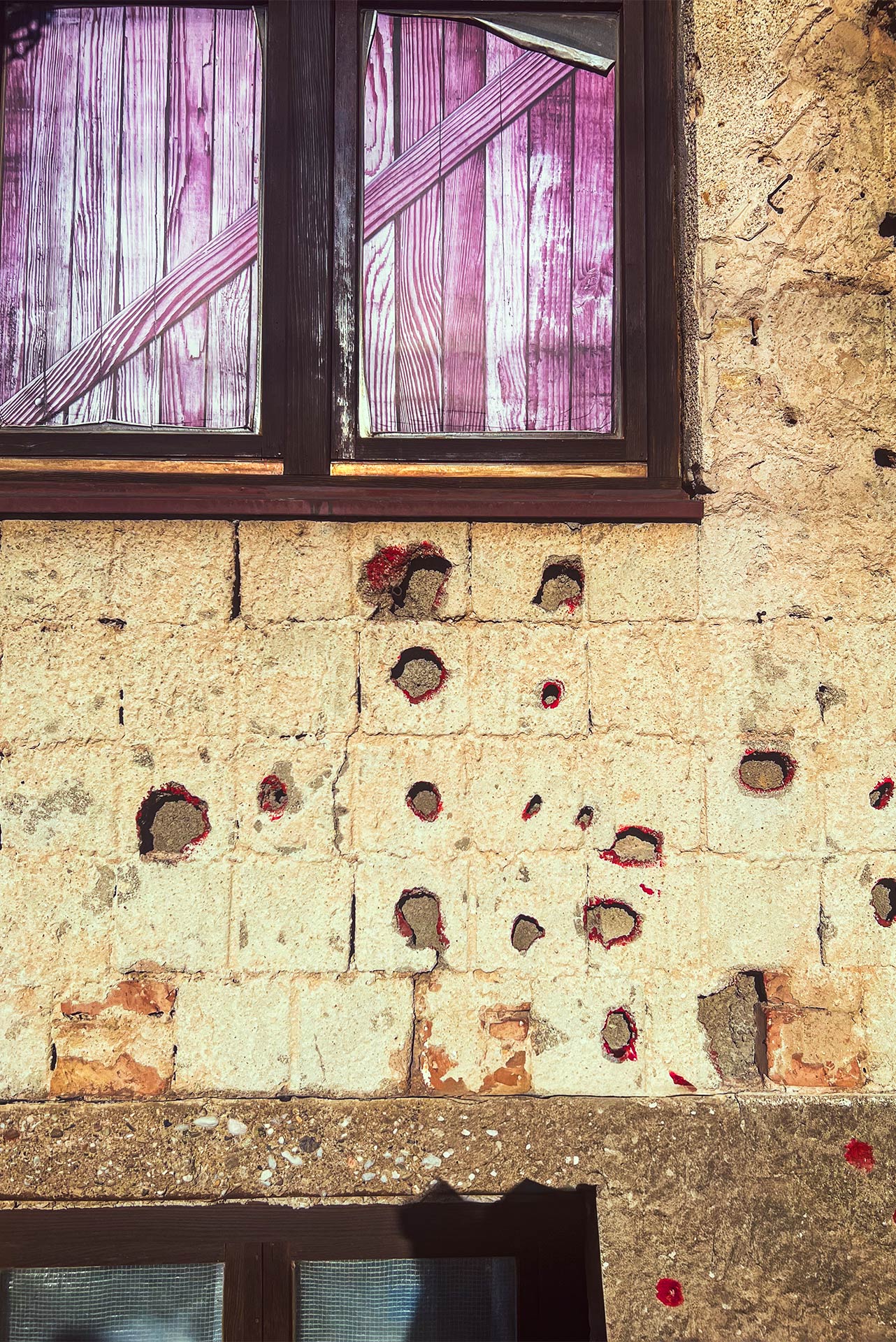
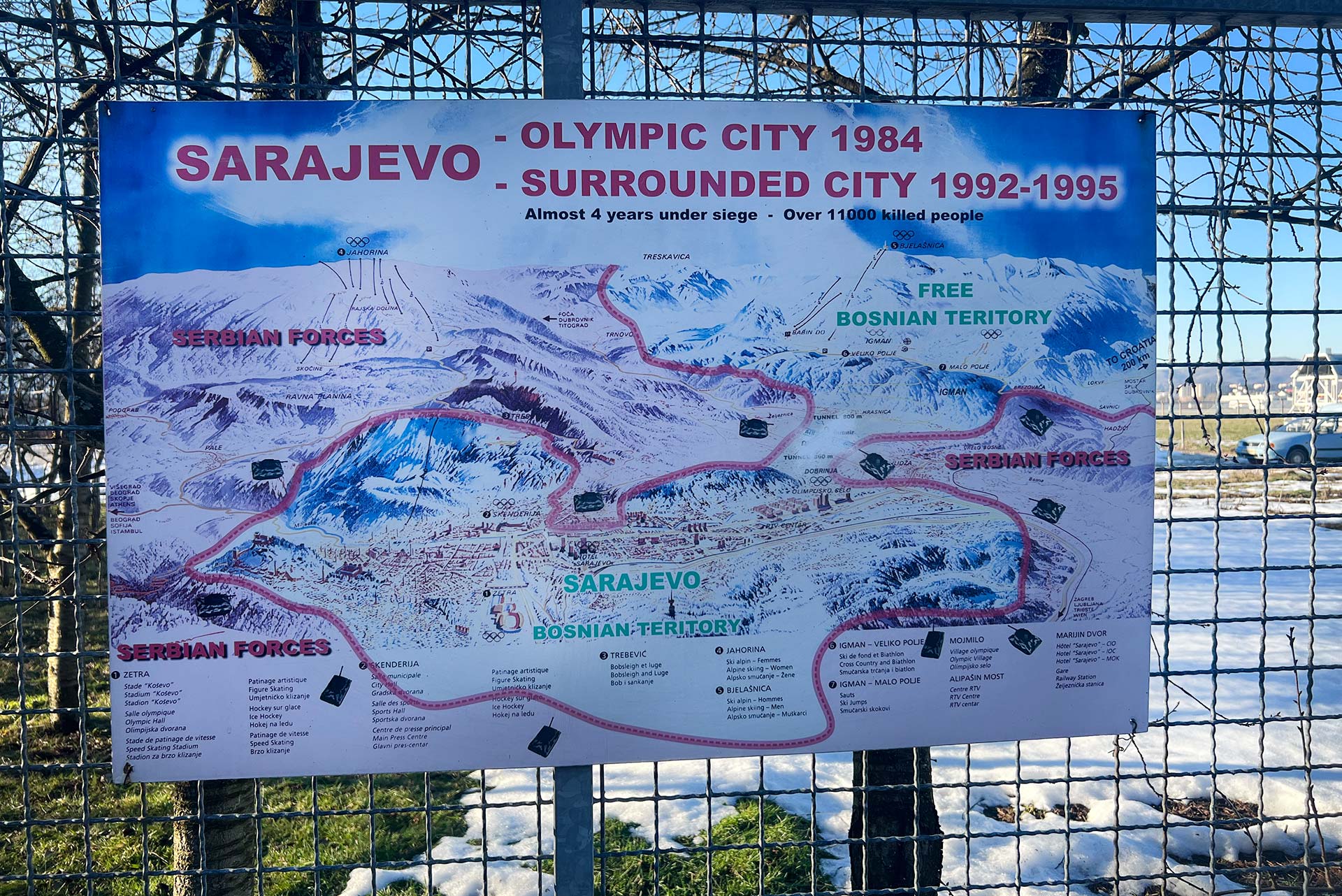
Sarajevo feels like a fairytale, if you look past the shelling craters. A “Sarajevo Rose” is easy to spot; splattered holes left behind by artillery fire were filled with red resin to memorialize the spot where someone was killed when the city was under siege. The Siege of Sarajevo lasted from 1992 to 1995, the longest siege of a capital city in modern history. That the assault came so shortly after Sarajevo put itself on display as host of the 1984 Winter Olympics made it all the more tragic.
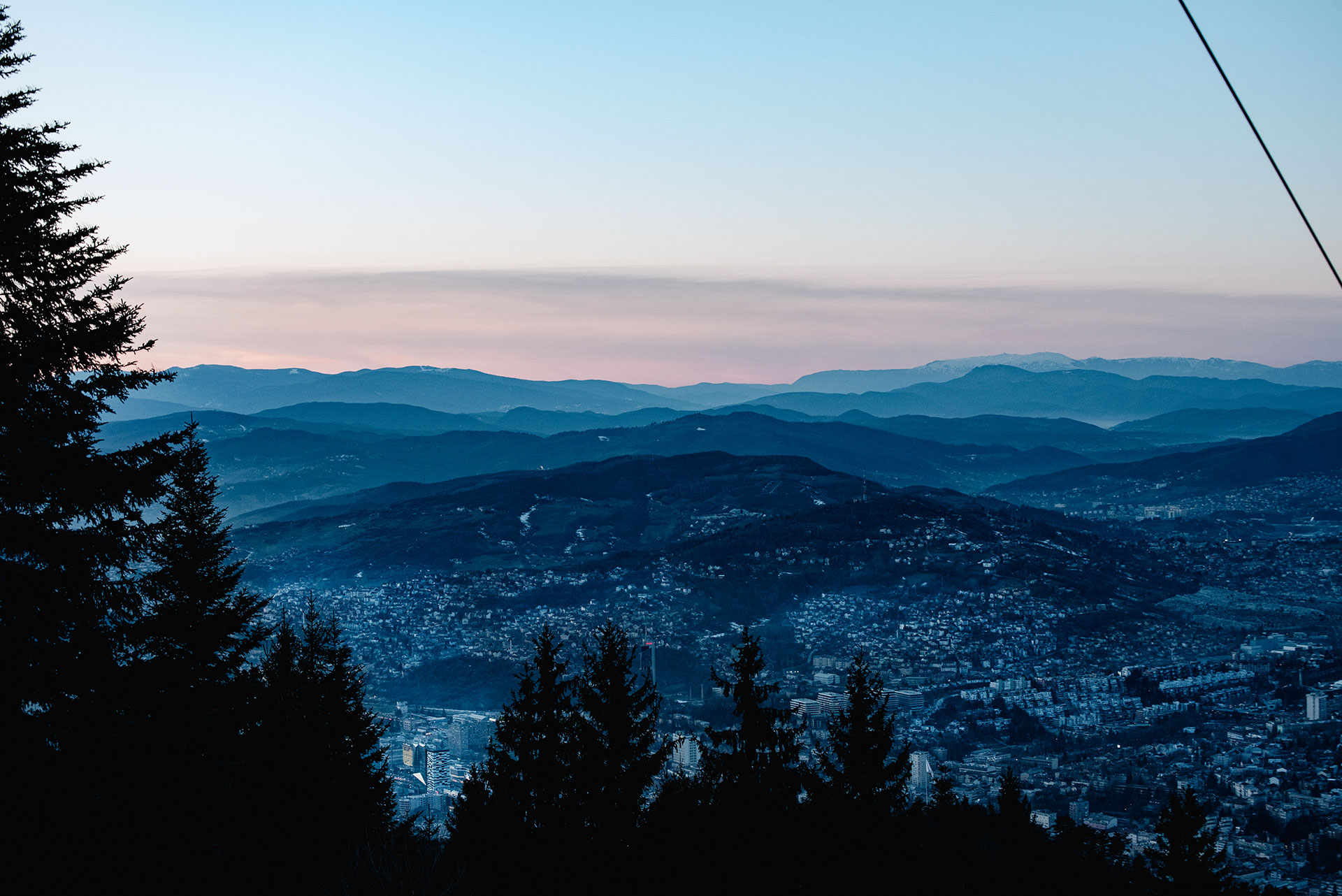
Sarajevo was chosen to host for a reason. Before the siege, the historic city was a multicultural cosmopolitan hub. Its idyllic location, in a dramatic valley beneath the Dinaric Alps, was optimal for the winter games. Then in 1992, during the breakup of Yugoslavia, Bosnia and Herzegovina declared independence. Bosnian-Serb leaders rejected the move, arguing that Serb-majority parts of Bosnia should remain within Yugoslavia.
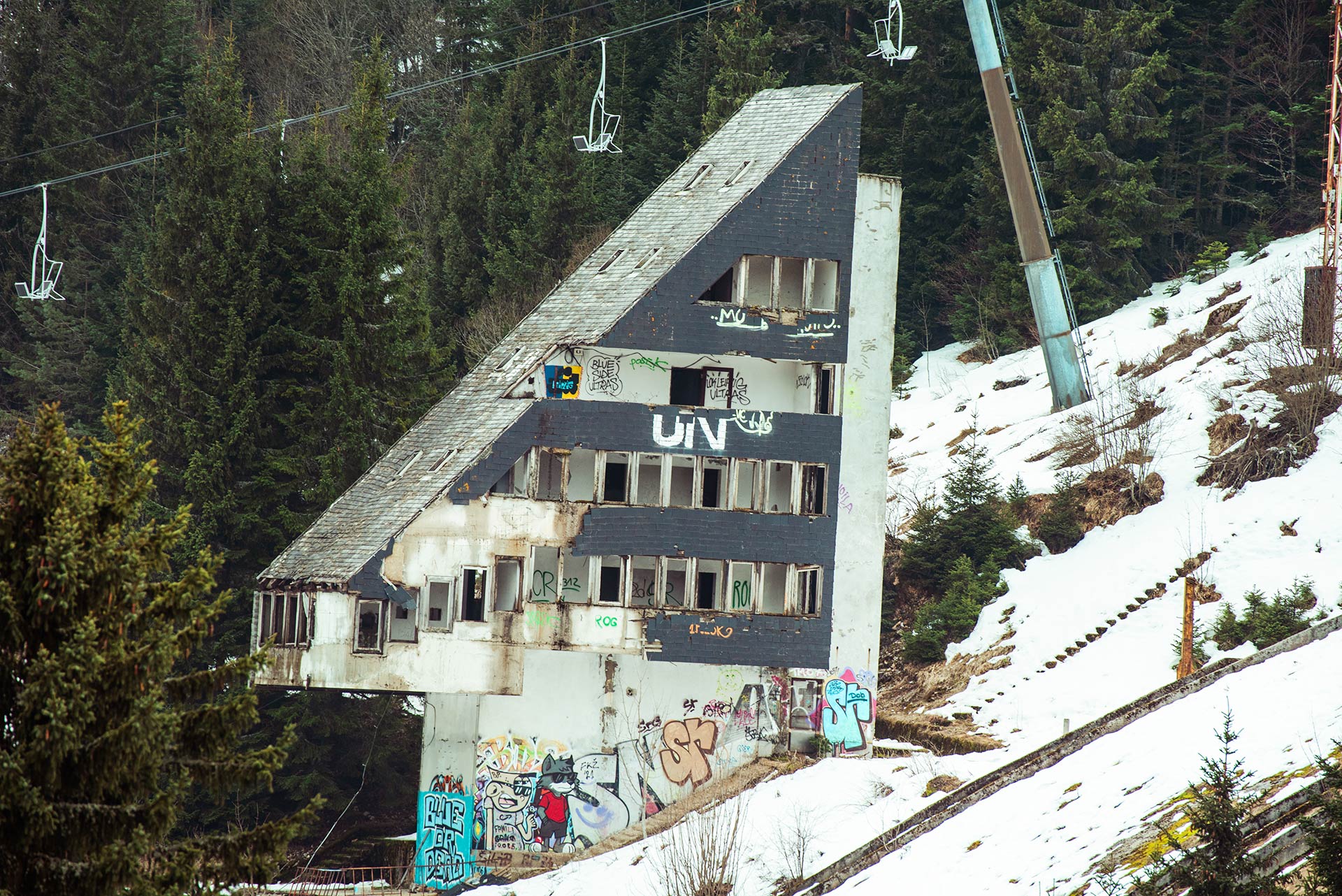
The Bosnian Serb Army subsequently encircled Sarajevo, laying siege from the mountains above, aiming their rifles and mortars at the residents below, using leftover Olympic infrastructure for their artillery positions.
Now, as travelers take a renewed interest in Eastern European destinations, Sarajevo is experiencing double-digit tourism growth. Yet its violent past lurks around every corner, confronting visitors with a painful question: What does it mean to be a tourist in a former war zone? The increasing interest in dark tourism can reduce places like Sarajevo to sites of spectacle: somewhere to photograph a blown-out building, tour a sniper position, and then return to the cafes of the old town.
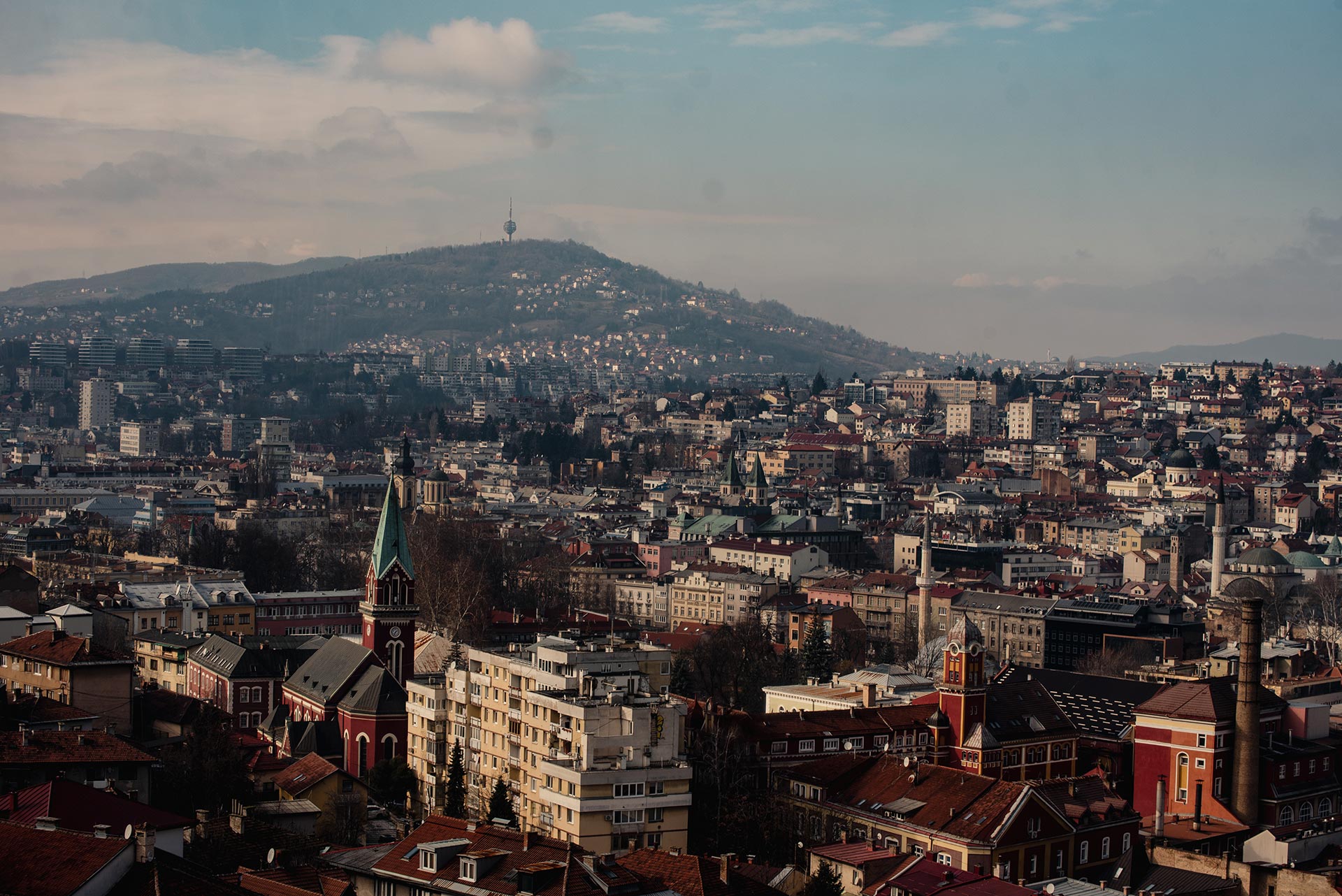
A respectful visit pays homage to the dead while celebrating the culture of the living. To understand what that means, you have to understand what happened here. The city’s mostly Muslim Bosniak population was trapped under shelling and sniper fire for four years, with severe shortages of food, water, and electricity. A year into the siege, Sarajevans managed to build a secret tunnel out of the city to smuggle resources: the Tunnel of Salvation, which visitors can walk through today.
But the supply lines did little to stop the onslaught. Over 11,000 Bosnians were killed in these quaint streets that radiate warmth, even on the frigid days when I visited in January. Where I stood, snipers once hunted the civilians of Sarajevo.
As I strolled through the city thirty years later, vendors sold freshly squeezed pomegranate juice, construction workers balanced on ladders to remove the Christmas lights, and children chased flocks of pigeons. I thought the history of these streets might be imperceptible if not for the roses. The concrete scars of war — in streets and on the sides of buildings — are ubiquitous.
Now the guns no longer fire, and the city is quiet. The loudest sounds emanated from the mosques calling Muslims to prayers, and the church bells ringing in the Old Cathedral.
But remembrance is woven into the fabric of this city, evidenced by a catalogue of small scattered museums: The War Childhood Museum, the Museums of Crimes Against Humanity, the Siege of Sarajevo Museum, the War Museum 1992. I unexpectedly found myself crying in a dimly lit room at Gallery 11/07/95, which displays photos of those killed in the genocide at Srebrenica in 1995, a few hours from Sarajevo.
However, remembrance is not the same as reconciliation, I am told. Survivors of the siege lamented the lack of meaningful resolution, describing a sense of limbo and being trapped in time. The Dayton Accords formally ended the conflict in 1995, but, as one tour guide told me: “The peace accords were built on division, not reconciliation.”
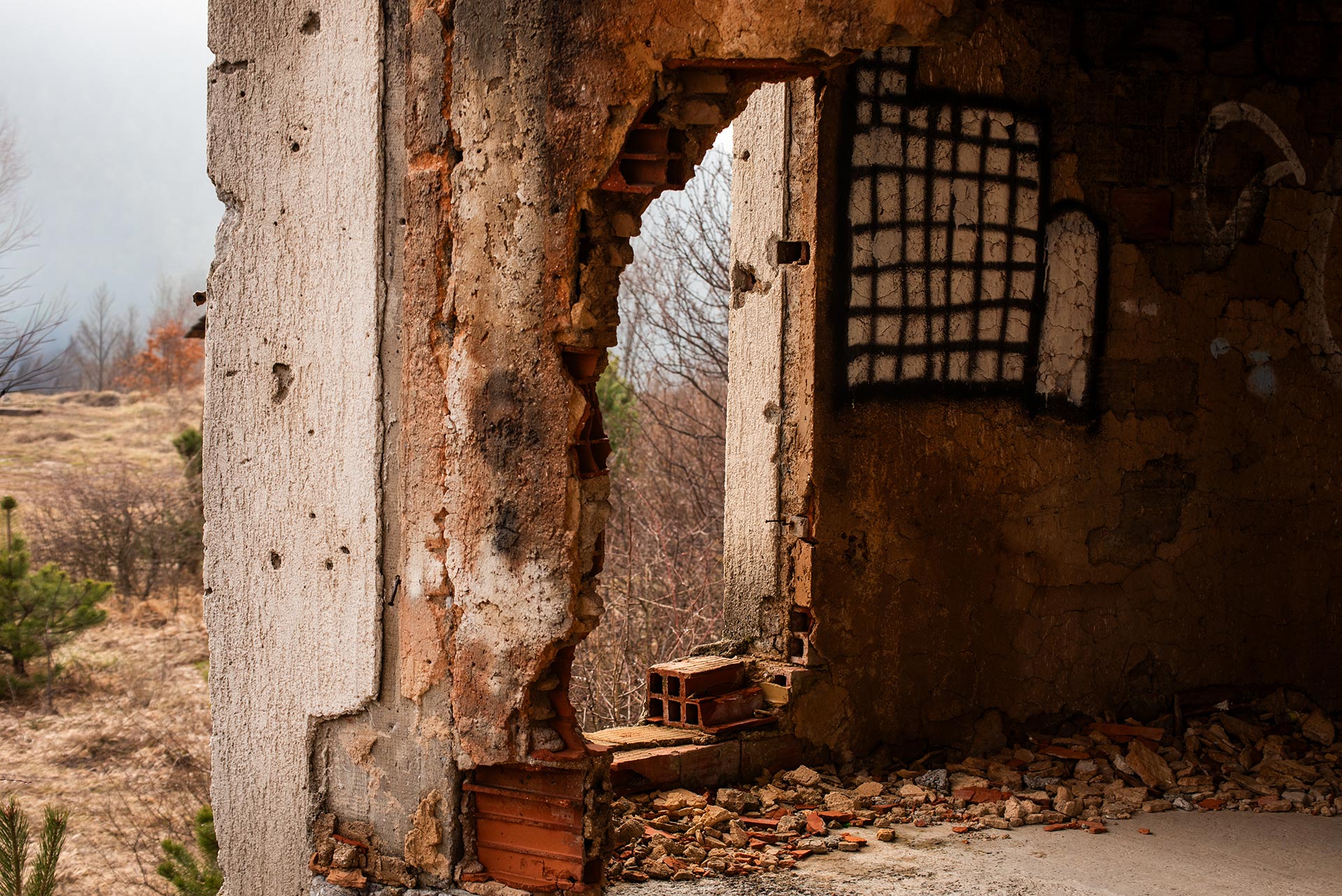
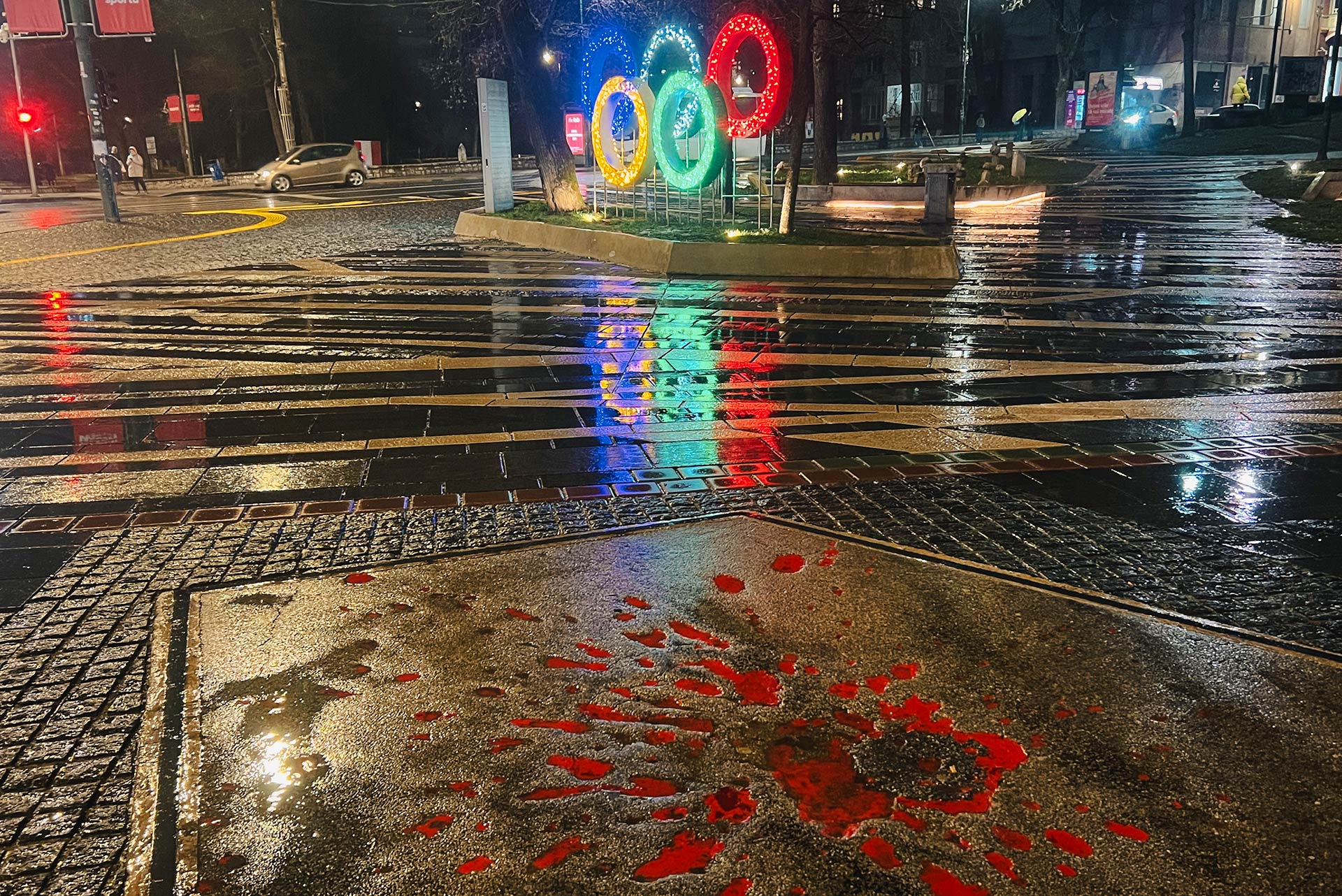
All these years later, Sarajevo remains deeply divided along ethnic and religious lines: Bosnian Muslims, Catholic Croats, and Orthodox Serbs. The post-war constitution even mandates that Bosnia has three presidents, each representing one demographic.
Yet Sarajevo’s diversity runs deep. Since its founding in the 15th century, the city has brought together different cultures and faiths, earning it the nickname “Jerusalem of Europe.” Sarajevo served as a crossroads between east and west, witnessing ceaseless caravans of people, republics, and empires. The Ottomans were here, followed by the Austrian-Hungarian Empire, and eventually Yugoslavia. This passage of peoples lends the city a stupefyingly diverse architectural style: Dark medieval alleyways lead to grand Art Deco buildings in pastels, before giving way to modernist austere apartment blocks.
Wandering this city is to experience a sort of cultural whiplash. In some ways, Sarajevo feels unmistakably European: restaurant patrons drink on outdoor terraces, smoking stylishly thin cigarettes as Christmas songs play in the background. In other neighborhoods, it is easy to forget you are in Europe at all, lost in a maze of Ottoman-era architecture and towering five-hundred-year-old mosques in the old town.
While perusing the narrow cobblestone streets of that era, I spotted a charming window display: small woodcarvings of traditional Sarajevo houses, lopsided, top-heavy, painted hastily with broad brushstrokes, evoking the quaint homes of the hillsides. The shop was called Bosnian Fairy Tale, clinging to the idealized portrait of Bosnia: expansive pine forests, bright blue rivers, and maybe some fairies.
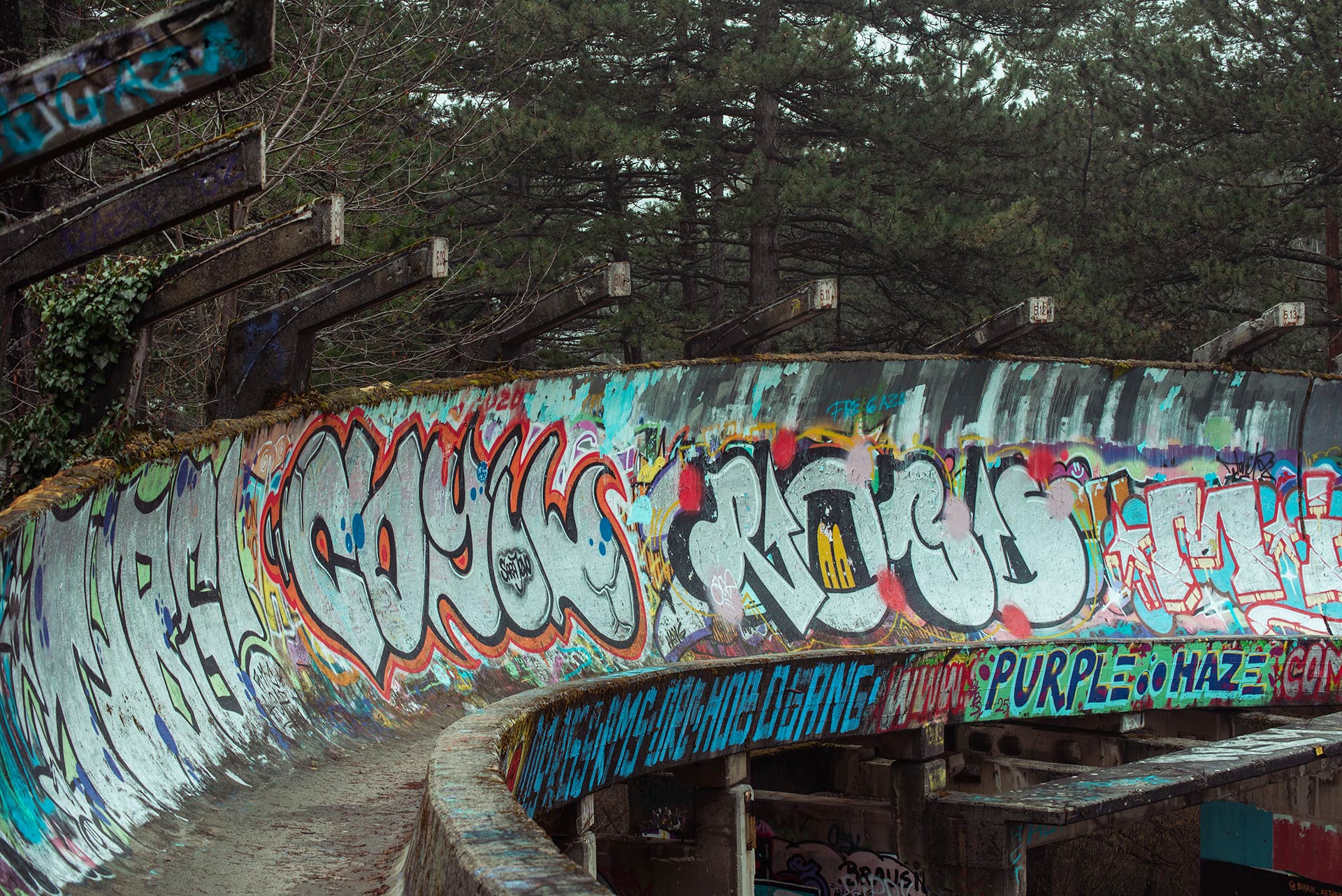
Outside the workshop, homes with red terracotta roofs lined the steep slopes down from the snow-capped Dinaric Alps above. There, the ruins of the Olympics lay, almost forgotten but not quite — a scenic cable car up Mount Trebevic can carry visitors from the city center to the abandoned luge track. Less than a decade after the games, the attractions purpose-built for sportsmanship, unity, and peace were used to wage war. The podium used for executions.
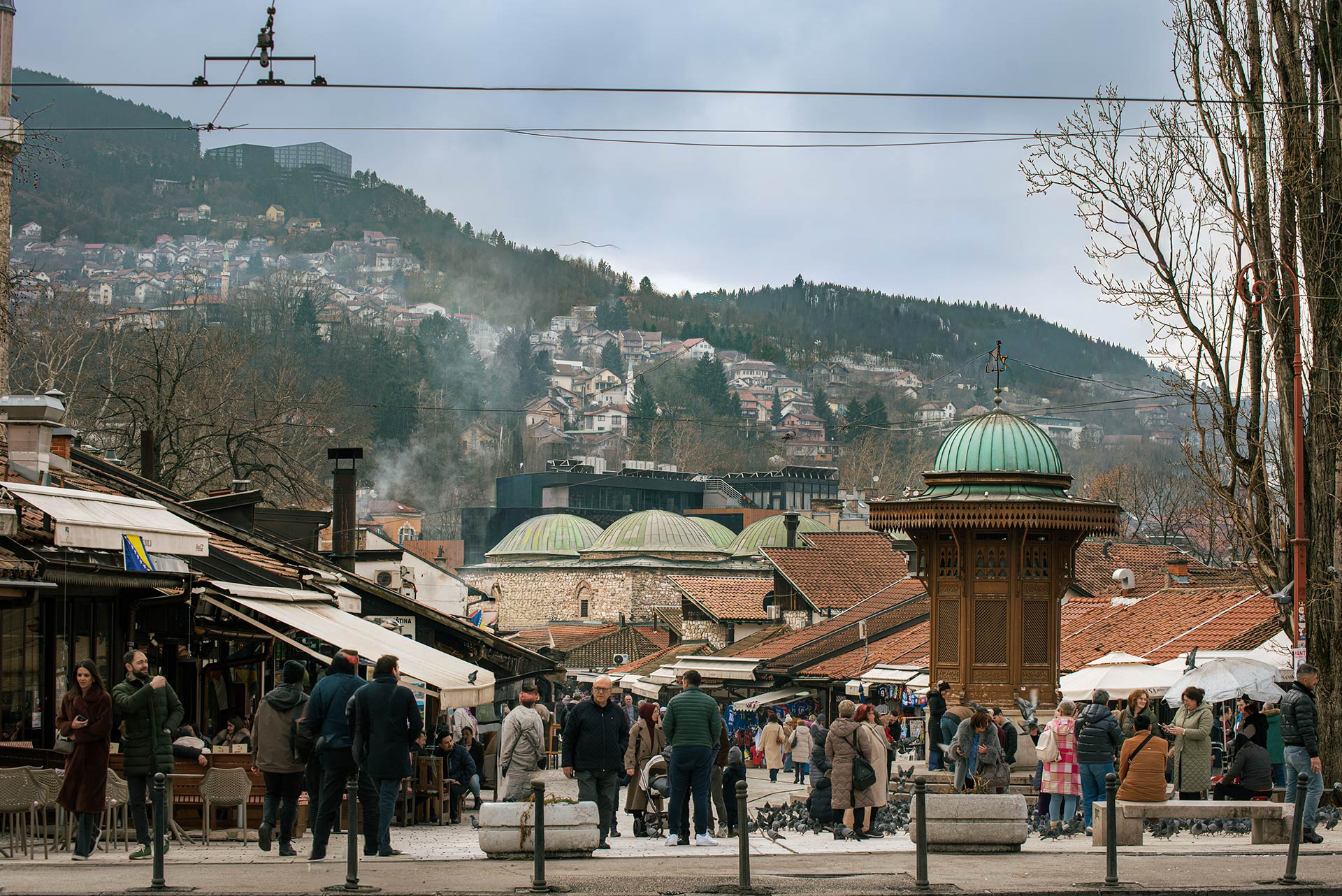
Today, Sarajevo pulses again with life. At the city’s numerous cafes, traditional Bosnian coffee flows generously from hand-engraved copper pots. At Markale Market, once the site of deadly shelling, vendors still peddle fresh produce, cheeses, and flaky burek pastries. Elsewhere, the old craft traditions endure: blacksmiths, leathermakers, and woodcarving workshops fill the alleys of old town. Here, coppersmiths repurpose bullets into fountain pens. Such acts reveal a city slowly knitting itself back together.
Maybe that is Sarajevo’s most striking lesson for visitors. The city does not exist solely as a monument to its suffering, nor does it ask travelers to ignore it. Instead, the war exists alongside everything else: the graveyards and artisans, the churches and mosques, the Ottoman alleys and Austro-Hungarian facades, the mountains and the museums, the Sarajevo Roses and the Olympic Rings. The war is omnipresent, but it’s not the only tale to be told.
The challenge for this city so full of stories: How to move on without forgetting?
Our hotel selection doesn’t currently feature any hotels in Sarajevo, but that doesn’t mean its story isn’t worth telling.